
Why Kimchi?
Hey there, I’m Angelina Fletcher and for my Craft Brewing Practicum, I really wanted to do something I can use in my house. Although I am doing a minor in the program and think craft brewing is very interesting, my interest in it peaked in the very interactive class about fermentation. As someone who is half-Japanese and lived in Japan, there are many foods that I grew up eating that I didn’t even realize were fermented. My fiancé also lived in Korea for a few years in his childhood and encouraged me to make sauerkraut or kimchi during that class, but I just didn’t have enough free time. When I learned that I could choose anything pertaining to the courses for my practicum, I thought what better time than now to try it out? Out of the many options, such as making my own Yakult or sourdough, I felt that kimchi would be the best. My partner loves kimchi, meaning he can be my taste-tester, and we need more vegetables in our diet. Making my own kimchi will allow me to adjust the spiciness to my taste.
Challenges Faced
My original plan was to buy ingredients and make multiple small batches over about two months and adjust the recipe as I went. The most unfortunate event was that the Gochugaru that I purchased on amazon which was only supposed to take one week to arrive got delayed and took three whole weeks instead. There was also a monetary issue with the supplies and ingredients. I had ingredients that I bought during the second week, that I had to either throw out or use in a rush in a different recipe since I was continuously waiting for the last ingredient to be delivered. As a college student in their senior year working part-time, I also underestimated how much time it would take to prepare the dish. I think it makes more sense why people make them in such large batches, as making one small batch and a very large one does not differ much in the total amount of time taken to prepare it. I need to wait until I have a little bit more money to spend before I make another batch, as I need to buy bigger bowls, the ingredients, and more jars to make more at a time and be able to give to some friends and family. Finally, I overestimated how often we would eat kimchi. With our current schedules, my fiancé and I rarely have time to make and eat anything at home unless it is frozen. We like to eat it with rice, seaweed, and another dish, which can get repetitive pretty quickly.
The Result
Supplies needed:
- Cutting board
- Knife
- Large bowls
- Colander
- Food processor
- Small spatula
- Gloves
- Paper towels
- 2 wide mouth mason jars (1 qt) Link to jars
- Fermenting lids and weights Link to fermenting lids and weights
Recipe is based off: https://www.feastingathome.com/how-to-make-kimchi/
Ingredients:
- 1 Large napa cabbage, cut into 1-inch pieces
- ¼ cup Iodine-free sea salt or kosher slat
- 1 gallon Distilled water
- 2 cups Daikon radish (or carrots if unavailable), cut into matchstick strips
- 4 Scallions trimmed and cut into 1-inch pieces
- 1 tsp Ginger, peeled and sliced
- 6 cloves Garlic, peeled
- 1 Shallot, quartered
- 1 tsp Sugar
- 2 Tbs fish sauce Link to Fish Sauce
- 4 Tbs Korean red pepper flakes (Gochugaru) Link to Gochugaru
Instructions:
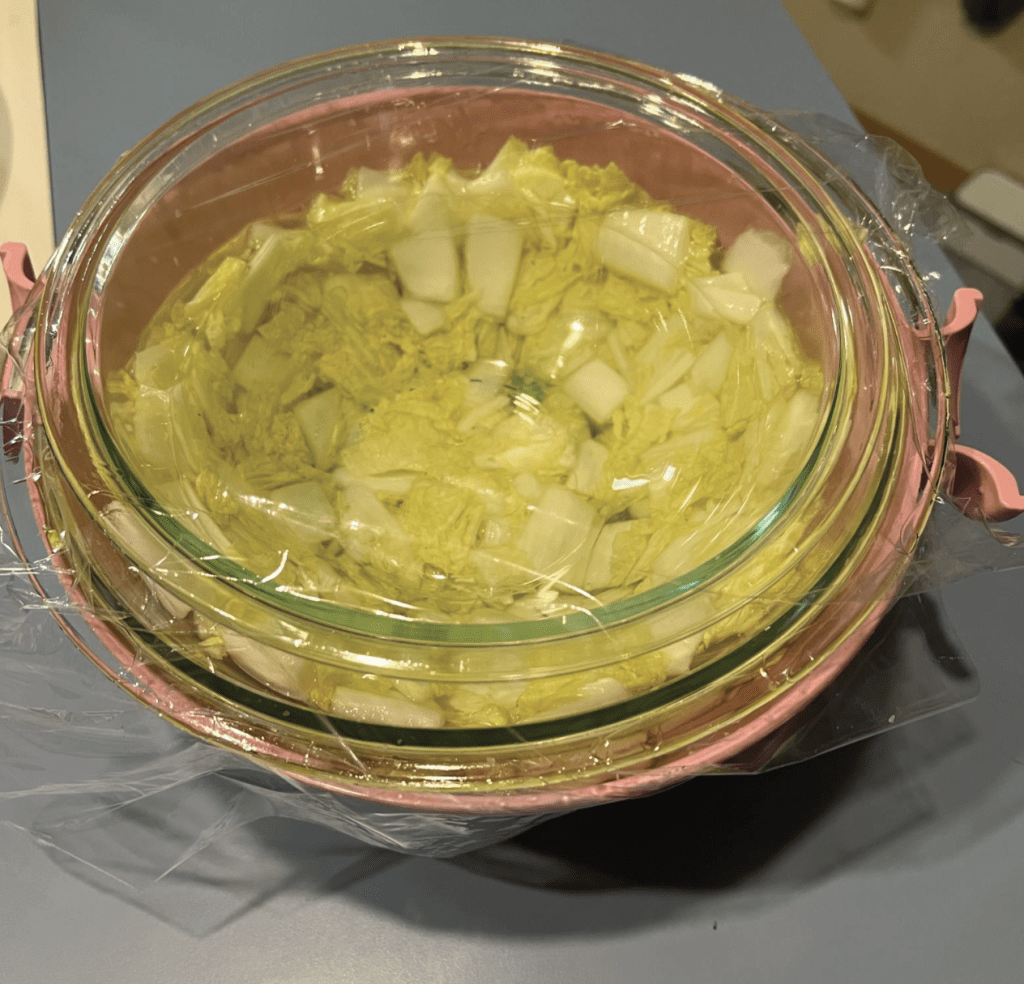
- Salting the cabbage. The night before making the dish, first wash and dry all utensils to make sure they are clean. Reserve 2-3 outer leaves of the napa cabbage, wrap them in plastic and refrigerate for later use. Cut the remaining cabbage into 1 inch pieces and place them in a large bowl. Add salt and toss until coated. Add enough distilled water to cover the cabbage and stir until the salt is dissolved. Use a plate or bowl to keep the cabbage submerged and let stand at room temperature overnight.
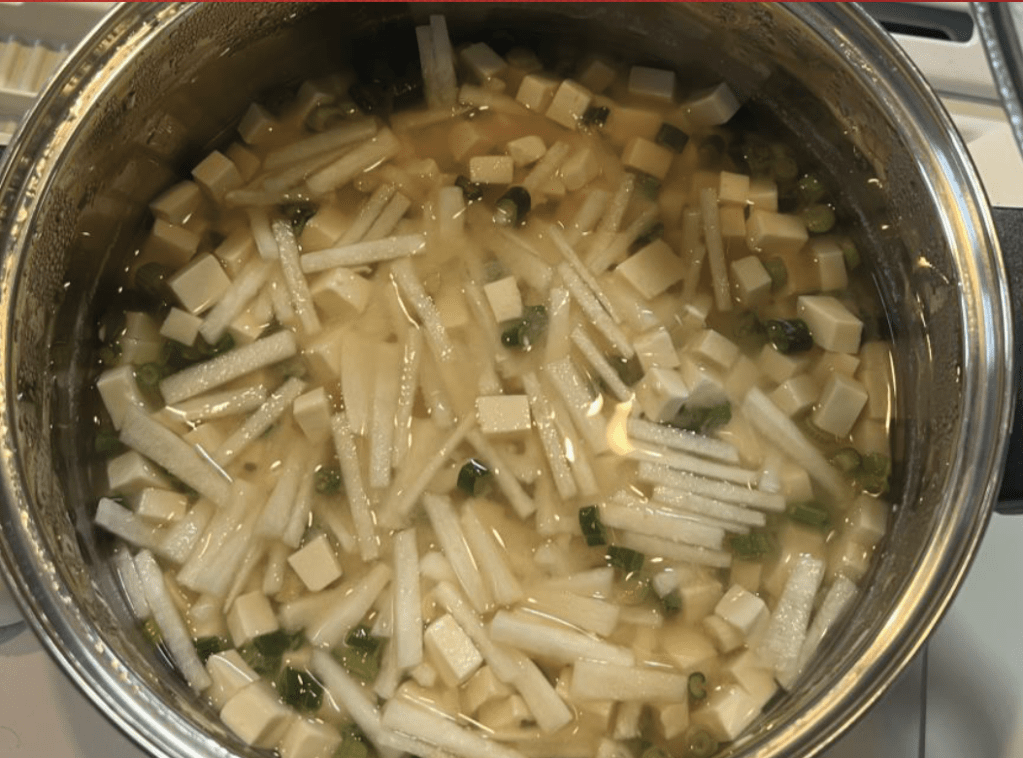
- Prepping the ingredients. Drain the cabbage, saving the brine to use later. Rinse the cabbage lightly, drain, and squeeze out any excess water. Blot them with paper towels and place them back in the bowl. Wash and cut the daikon radish into matchstick strips, and the scallions into 1 inch pieces. Add the daikon radish and scallions into the bowl with the cabbage. Peel and slice the ginger, peel the garlic, and peel and quarter the shallot. (Tip: Wash all utensils you will not be using anymore as you go to make the cleaning process easier).
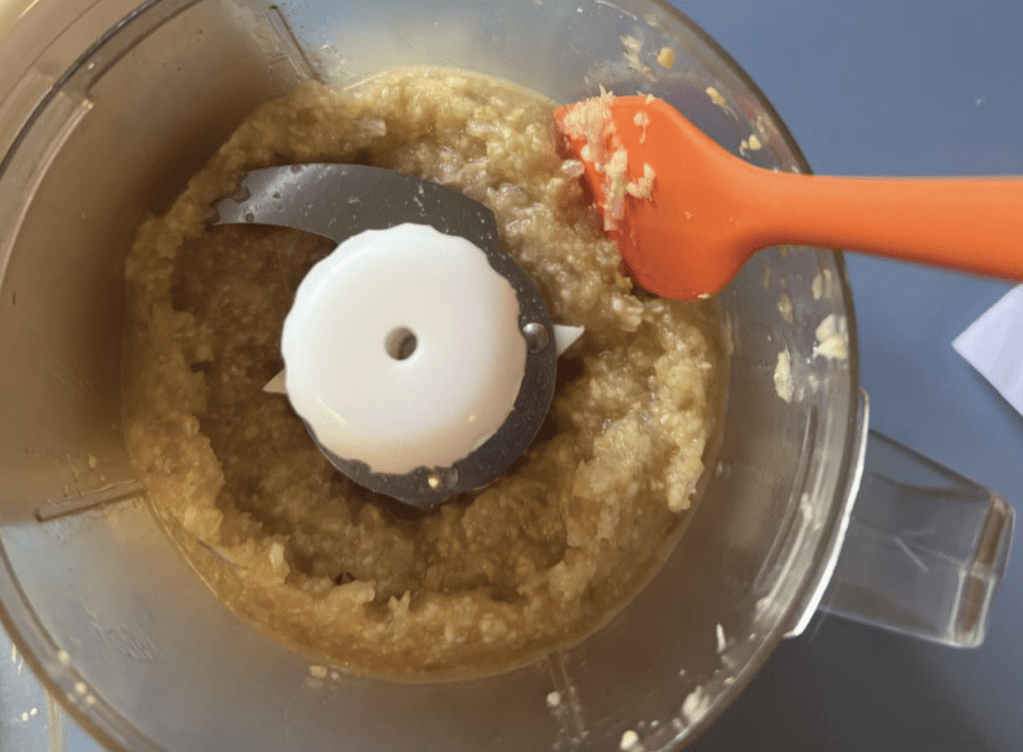
- Making the paste. Place the ginger, garlic, shallot, sugar, fish sauce, and Gochugaru (2 Tbs for mild, 4 for medium, and 6 for spicy) in the food processor. Process until well combined until it becomes a thick paste. Utilize the spatula when necessary.
- Mixing it all. Scoop the paste over the cabbage mix. Use gloves to mix and massage the vegetables with the red pepper mixture together until well coated.
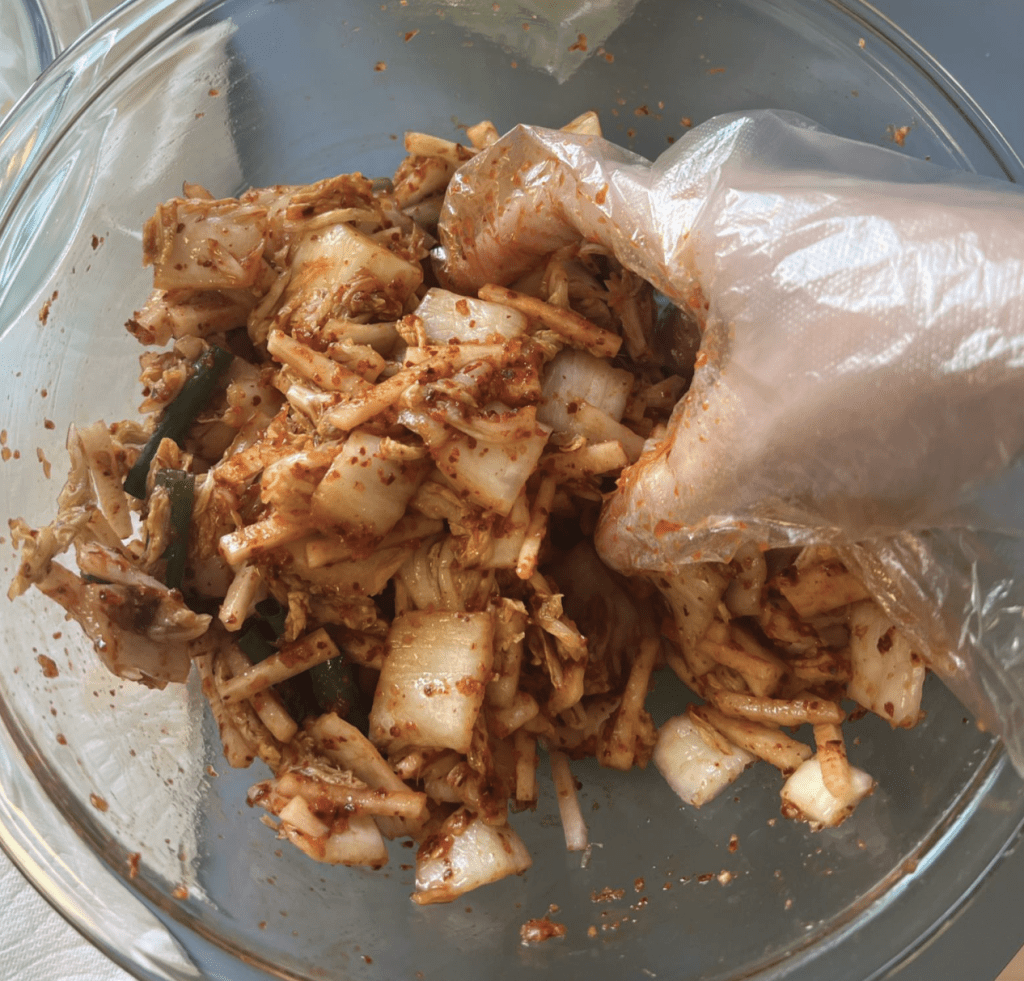
- Packing the jar. Pack it all into the jars, leaving almost 2 inches of room from the top of the jar. As it ferments, there will be juices that get released. Add a little of the reserved brine, enough to cover the vegetables. Place the cabbage leaf from step 1 over top, pressing down to make sure all vegetables are submerged under the brine. Place the fermentation weight over the top of the leaf. Anything that is not submerged and touches air may mold.
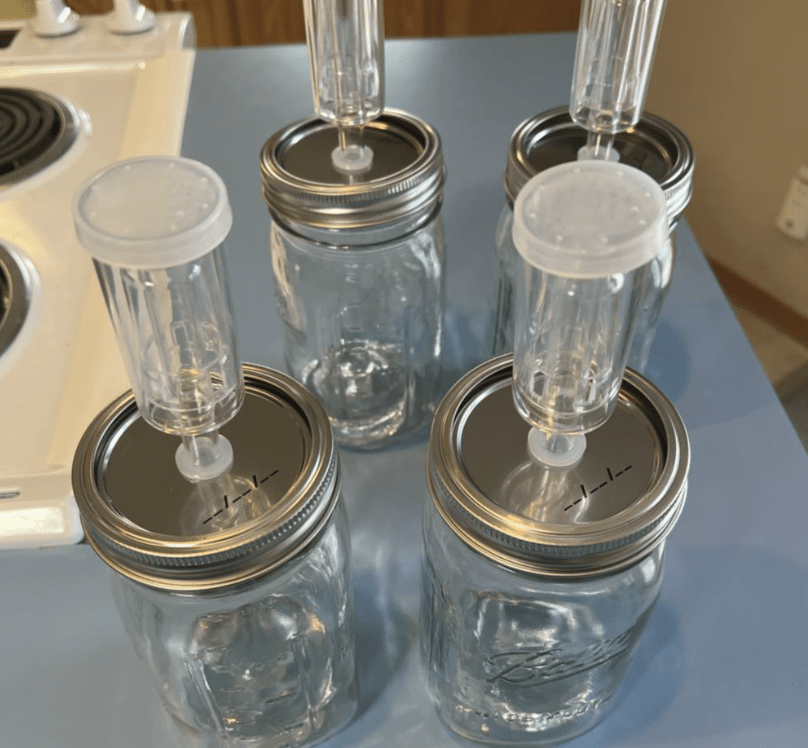
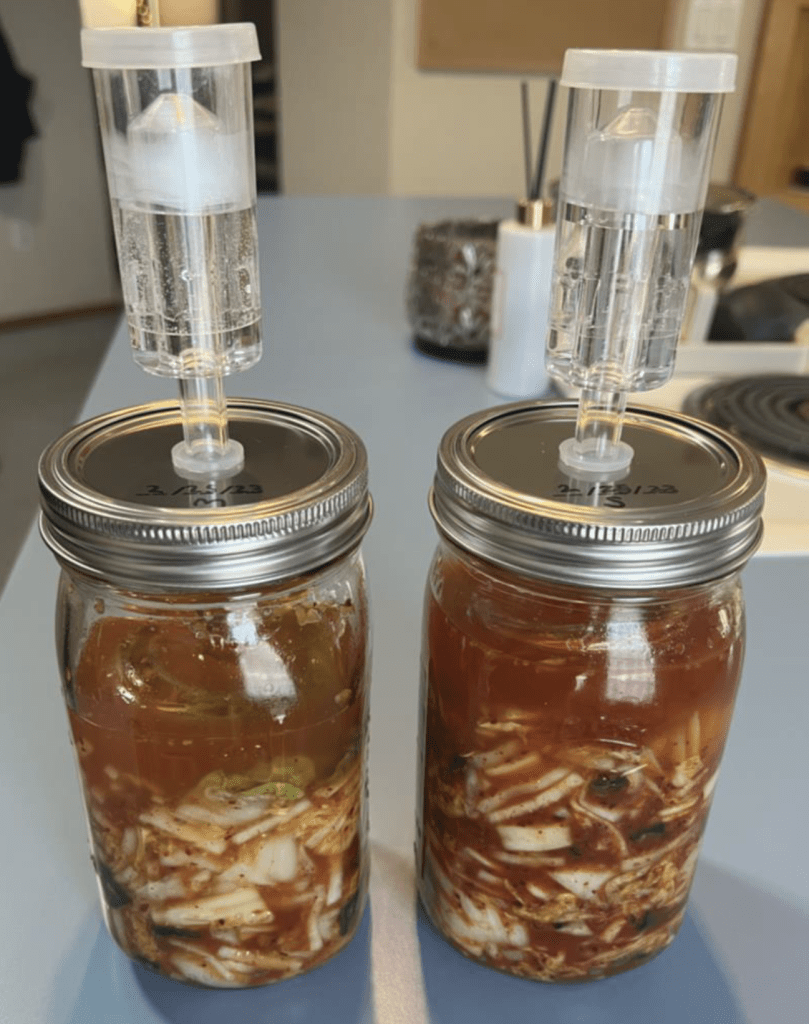
- Fermenting the kimchi. Screw on the fermentation lid, making sure it is properly filled with water. Leave the jars somewhere dark and cool, ideally between 55 and 65 degrees Fahrenheit, for at least 3 days. A basement or lower, cooler cabinet in the pantry or kitchen away from appliances works best. Check the jars daily to marvel at your work and make sure they are not overflowing and making a mess. The juice level should rise daily, with some bubbles showing fermentation is happening.

- Refrigerate when ready. After you see bubbles (usually 3-5 days) the kimchi is ready, but it won’t achieve its full flavor and complexity until about 2 weeks slowly fermenting in the fridge. The longer you ferment the more complex and tangy it will taste. The kimchi will keep for months in the fridge if it is submerged in brine and will continue to ferment very slowly, getting more and more flavorful. Feel free to remove the cabbage leaf and just press the kimchi down under the brine after each use. There are many ways to enjoy kimchi, both as a side dish and to incorporate into cooking!
Result Analysis
When I split my batch into mild and spicy portions, I used the equivalent of 2 tablespoons of red pepper flakes for the mild and 6 tablespoons for the spicy portions. The mild one allowed more of the ingredient flavors to come through, and I did not have any problems eating it, even as someone who has a hard time with anything spicy. My fiancé had more of the spicy kimchi, which he liked the flavor of more but said he liked the tangy taste of the mild one better. Once I have the large bowls and fresh ingredients, I will be making one homogenous mixture of 4 tablespoons to make one in-between in spiciness.
Future Plans
Along with making a medium spicy batch of kimchi, I would love to try fermenting some for longer and comparing the tanginess. There are also many other recipes out there I would love to try, experimenting with different methods and ingredients to see which my fiancé and I prefer the most. Finally, between different batches of kimchi, I would also love to use the supplies I have to make sauerkraut, going through the same process of experimentation to find the perfect recipe.
 CWU Craft Brewing