My name is Levi Cruz and I am a Senior Craft Brewing Major at CWU. My major is in Craft Brewing, which I do in my free time, but through my internship I have grown interested in the hops side of the industry.
Currently I am receiving practicum credits working at a local hop farm, Virgil Gamache Farms. I work in the lab portion of the company called ‘Hoptechnic’.
When working in the lab of a hop farm it is not easy to stick to one project at a time. There are always new projects that can be started, and some often get pushed to the side because of new important projects. I will walk you through what the past 2 months have consisted of and the projects I was involved in.
Can we make a hop water?
One of the main projects that has been in the works is the recipe development of a ‘hop water’ that we can offer on the market. This project started by simply tasting existing hop waters that are available for purchase and stating what we liked and didn’t like. We then proceeded by ordering hop extract samples from a cannabis company. Cannabis companies are often very good at extractions, and are often ahead of the hop industry in many aspects. This company sent to us about 10 different kinds of Amarillo and Sorachi ace hop extracts for us to play around with. Amarillo is VGF’s patented hop variety, and Sorachi Ace is a very intriguing hop with dill and spice characteristics.
I started by creating about 25 different ratios from the vials of extracts they sent us. Some of them were water soluble, some of them were not, so getting them to mix was a problem. At this stage however, I was only trying to find a combination that presented a pleasant aroma. We then picked about 6 of the best smelling combinations, and ran them on our instruments to see what we could find out. I ended up having to run them again and we determined the extracts weren’t going to work and we were going to have to use something else for our hop flavoring.
Can we make our own hop flavoring?
This idea began by reading an article about how ‘spent hops’ (what’s left after extracting mostly all the alpha acids from hop pellets) can be used as a hop flavor addition. After a CO2 extraction from the hop pellets, another water or ethanol extraction is done to extract the hop solids. The idea is to find a method of hop extraction that we can add to a non-beer beverage (hop water).
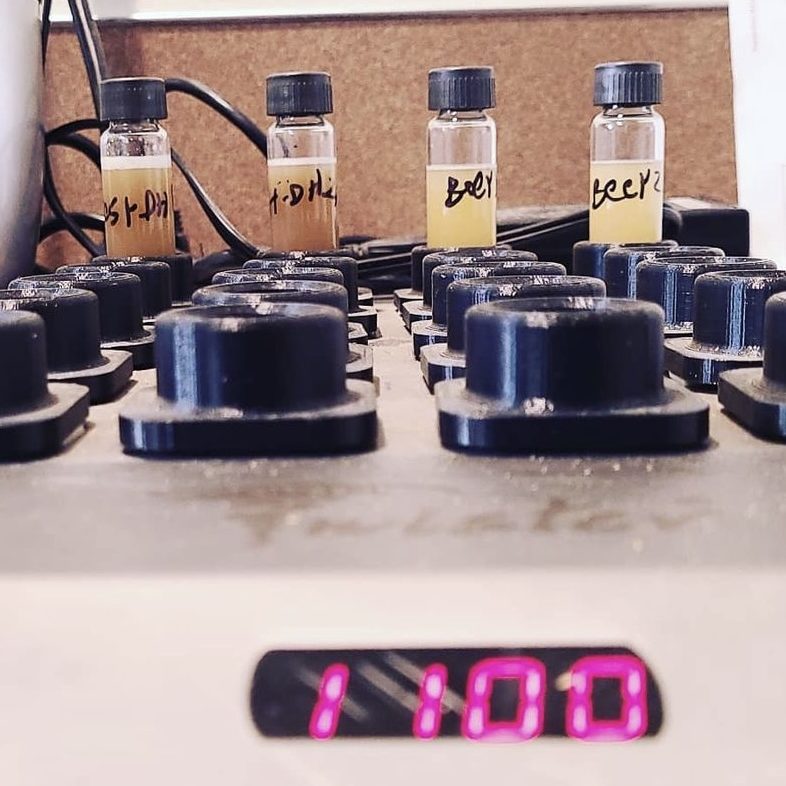
I began the experiment by seeing the effects of yeast on the hop flavors in a beverage. I prepared flasks of 10 grams of hops and 250 mL of water that were all heated at 170 degrees. This created a hop tea that I could add to a fermented beverage. I then added dextrose and yeast in 2 of the flasks and let them ferment in a cooler with the hop tea mixed in. In the other 2 flasks I added the dextrose and yeast to ferment without the hops in the mixture. I planned on adding the hops after the fermentation was done. I am currently waiting to view my results but I have done some thinking about the procedure.
What I realized after finishing this first trial is that for the yeast to ferment, they may need more than just dextrose. Using only dextrose may cause the yeast to become stressed and produce strange undesired flavors that could mess with our results. I decided I should give the yeast some nutrients during the fermentation and that a dry malt extract would work better than dextrose. I look forward to continuing my work on this project and eventually producing a hop flavoring that could be used in VGF’s hop water.
What else?
Working at VGF, or more specifically, Hoptechnic, has given me first hand experience in the vast world of hops. Almost every time I come into work there are new hops that were sent to us for testing and sensory. Every once in a while we run all of our standard solutions on our instruments to ensure they are running correctly and we can get accurate data.
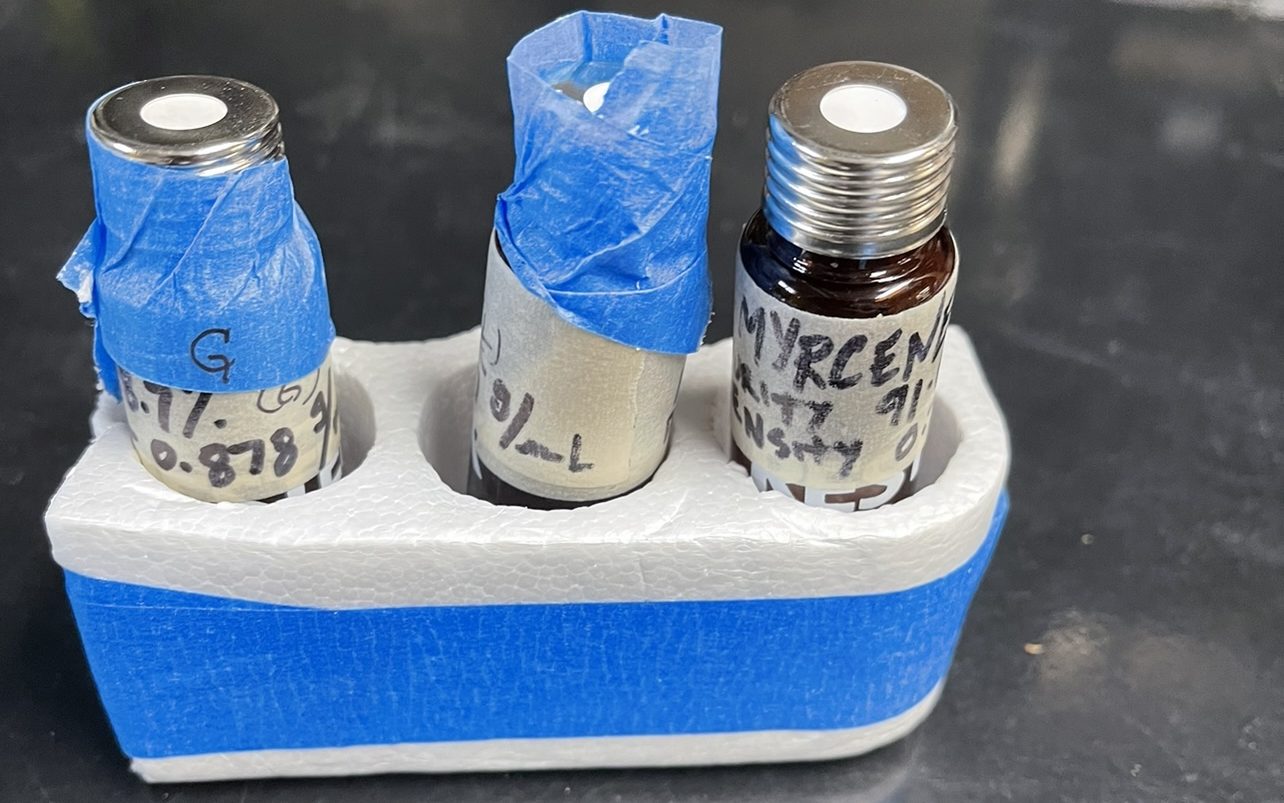
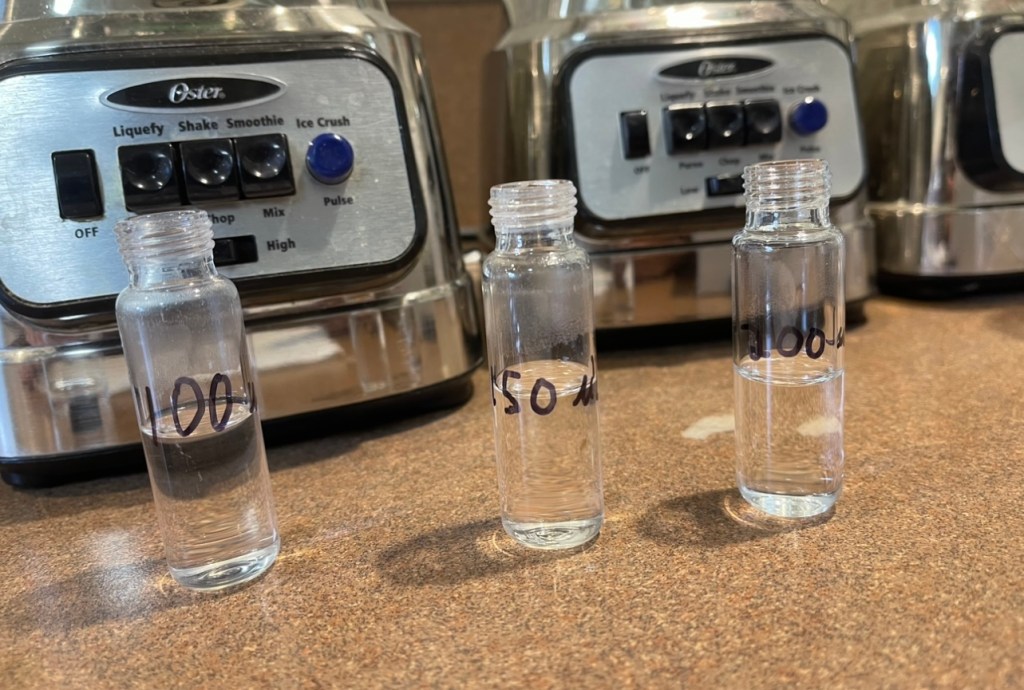
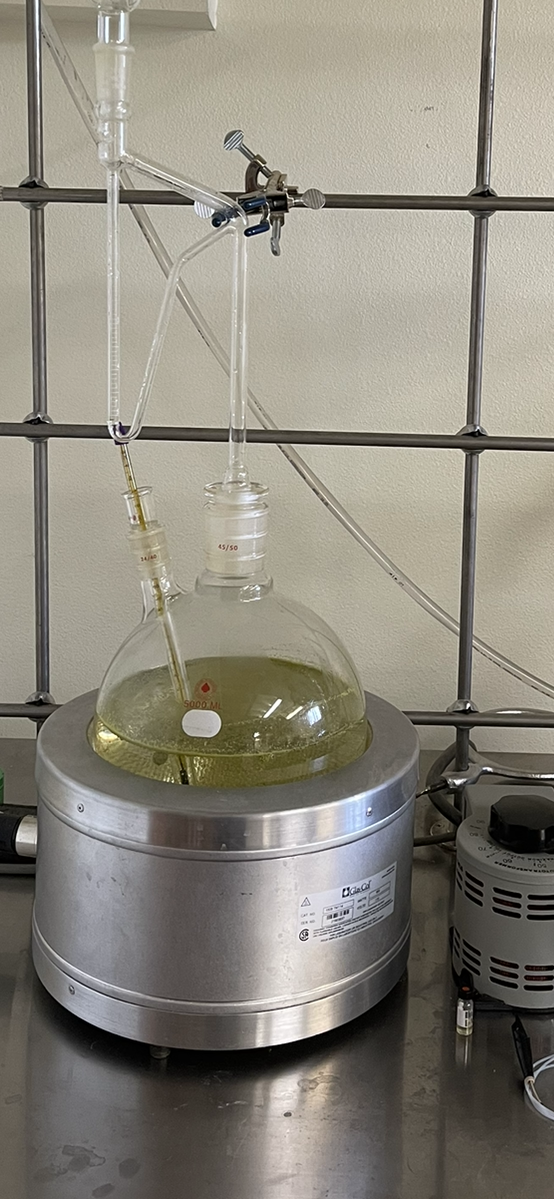
We are often performing distillations with hops and water to extract the oil contents and run them on our HPLC. HPLC stands for High-Performance Liquid Chromatography, formerly referred to as high-pressure liquid chromatography. It is a technique in analytical chemistry used to separate, identify, and quantify each component in a mixture.
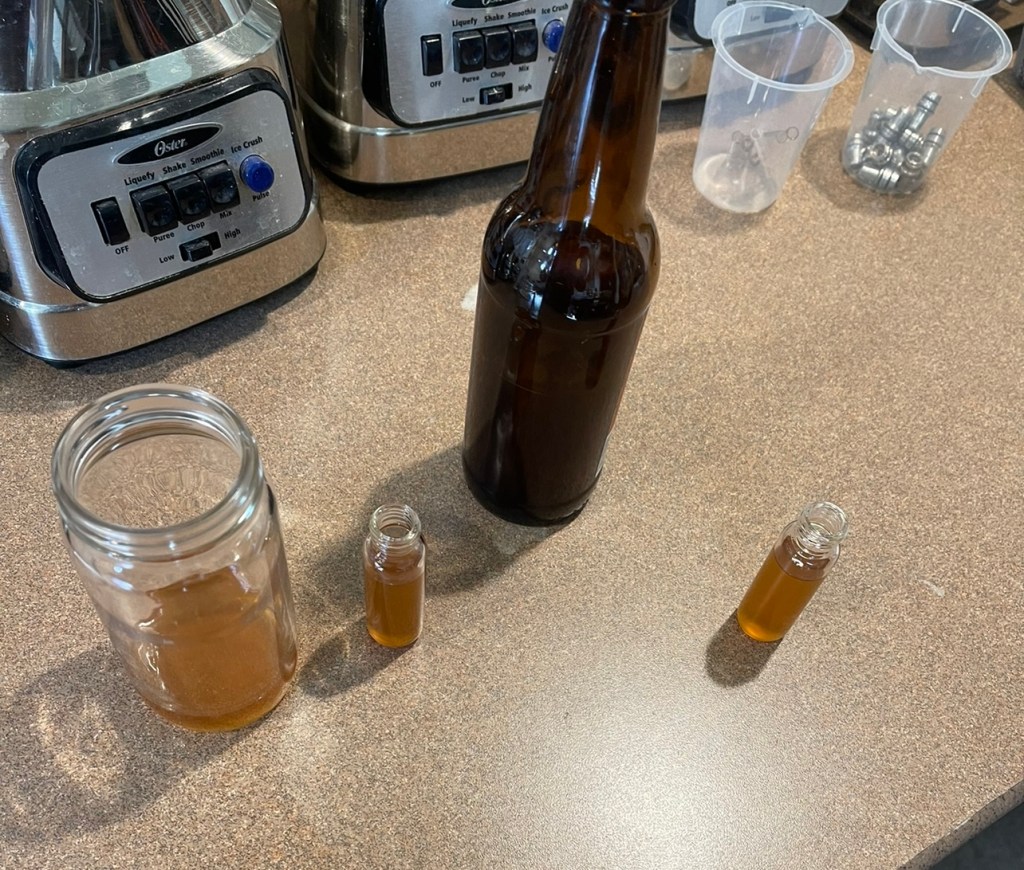
As I mentioned before I often make my own beer, usually at home. Working in this lab comes with the opportunity to run my own beer on our lab instruments. From this I can learn what thiols and terpenes are being expressed, to see what hops are being showed off. I can also determine the alcohol content and an IBU estimate.
If you are looking for a place to learn about hops in all of their various forms, beers in some aspects, and how the brewing and hops industry coincide… a hop farm is the place to be.
-Levi Cruz
 CWU Craft Brewing