My First Three Brews as Head Brewer.
I am currently in my senior year at CWU studying Craft Brewing. I have my AA in Biology and relocated to the Central Washington area about two years ago. While studying at CWU, I took on a taproom position at Mule and Elk Brewery in Cle Elum. Over the course of my time there, I worked my way up to Assistant Brewer, then eventually Head Brewer in December 2022.
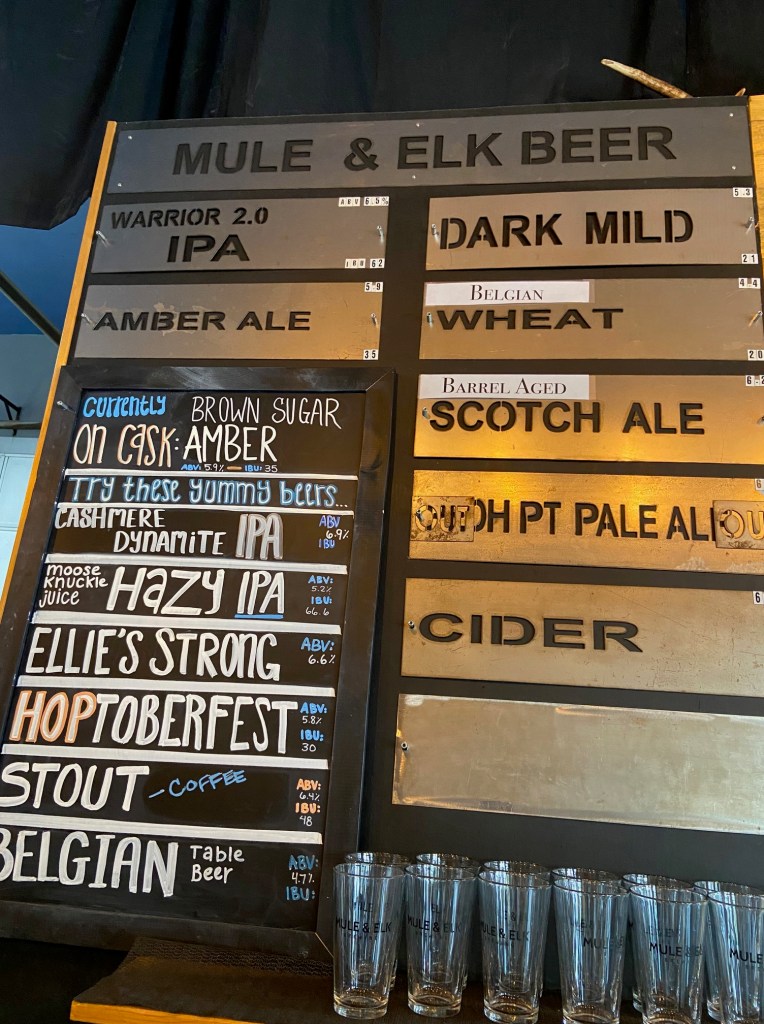
This new position was overwhelming to say the least. My training to take over brewery operations was roughly two months long. I had a lot of new responsibilities, and the entire brewery would depend on how well of a job I would do. My first task was brewing three of Mule and Elk’s flagship beers, Amber Ale, Ellie’s Blonde and Dark Mild. I had previous recipes to follow, and guidelines given to me by management. I was given our suppliers’ list, a company credit card, and I was off running. All three of those flagship beers would end up with different fates…
The first brew was the Dark Mild. This would be my first 100% solo brew. I followed the flagship recipe and was asked to bring down the ABV. It was currently standing at 5.4%.
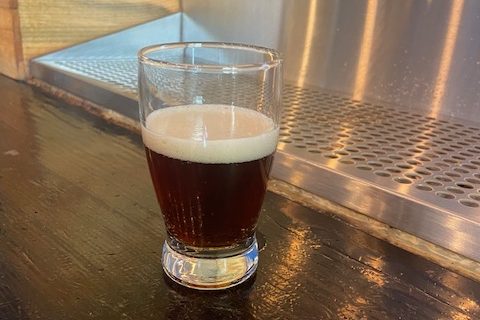
This brew would be the smoothest beginning to end. I had brand new yeast, which helped, and the beer turned out to be 4.4% ABV.
I also filled two firkins (a small cask) to put on our cask ale system (the only one in Kittitas County by the way). This beer was right on point when it came to taste, flavor, color, and I was able to bring down the ABV, restoring the session ale style of the Dark Mild.
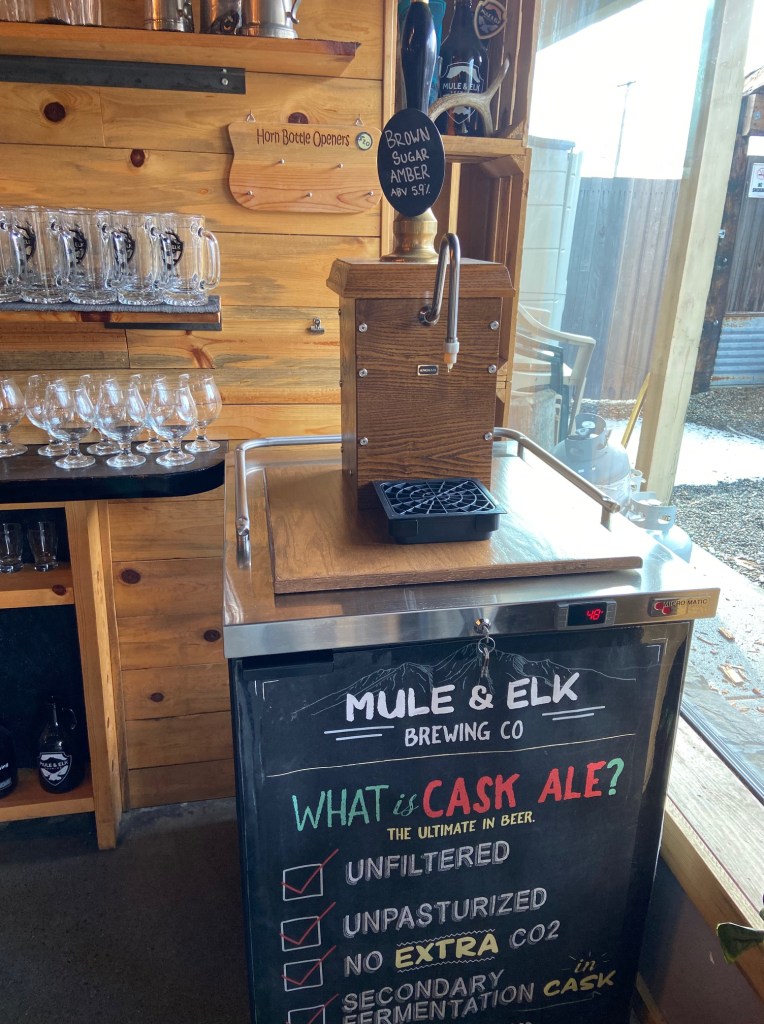
The second brew was the Amber. I brewed extra so I could fill a 7-barrel fermenter and a 2-barrel fermenter. I re-pitched the yeast used in the Dark Mild brew from the week previous.
The 2-barrel batch turned out slightly higher in ABV than expected (5.6% vs 5.9%) but was right on the flagship style otherwise. The 7-barrel batch was taking a bit longer to ferment. The ABV was still very low after 10 days, and I was seeing very little fermentation. After discussion with management, we decided to perform a taste test and make an executive decision.
It tasted terrible. There was this plastic, band-aid taste and it wasn’t something we could ever serve. This was the well-known off -flavor: phenolic. The whole batch had to be dumped, there must have been a sanitation issue at the beginning. I ended up having to re-brew the Amber a few weeks later with much better success.
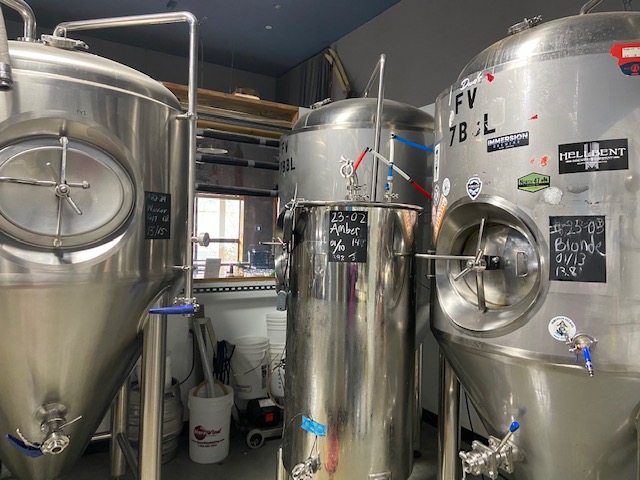
The third flagship beer to brew would be the Ellie’s Blonde. This brew day was my most efficient and focused now that I was on my third brew. I would brew extra like I did with the Amber and separated the Blonde into two vessels: 2-barrel and 7-barrel.
The day after the brew when I was performing my after-brew checks, I noticed the temperature reader on the 2-barrel fermenter read correctly, but the outside of the tank was warm to the touch. The temperature probe was hanging on the wall reading the room temperature, not the tank temperature. This simple mistake caused me to think the liquid I was adding after brewing was the right temperature, but it was too hot. Like so hot the tank was still warm the next day. This killed all the yeast and there was no fermentation. I had only made hot sugary water. This 2-barrel batch would also be dumped.
The 7-barrel batch of Blonde saw a much better future than it’s 2-barrel sibling. This brew fermented a day or two longer than I should have let it, causing the ABV to be about 1% higher than normal: 5.5% to 6.6%. The taste was still great, so we decided to call it Ellie’s Strong. This beer has been a big hit at the taproom and a lot of customers say they prefer it to the previous one!
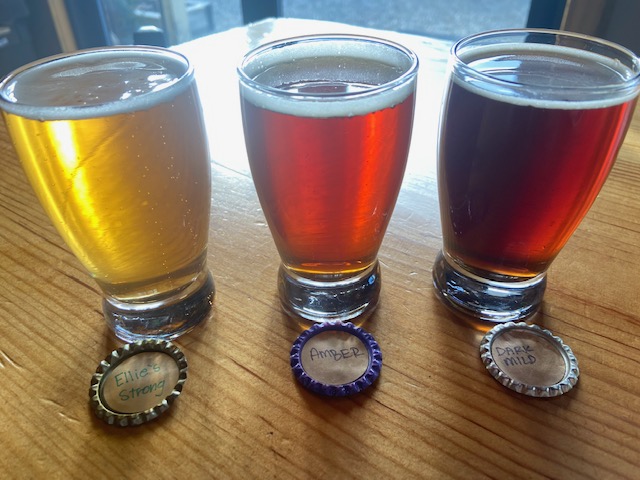
I have learned a whole lot since taking over operations in December. I have made some mistakes that have taught me valuable lessons for my brewing career. However, I’ve also been able to fill this role in a short amount of time and had successes as well.
There are a lot of responsibilities that come with this role that go beyond just brewing good beer. I still have a lot to learn and mistakes yet to be made that will shape me to be the best brewer I can be. At the end of the day, all I want is to serve good beer to my community, and every day in this position will help me make that happen.
 CWU Craft Brewing