
Hello, my name is Molly Spurrell and I am a Craft Brewing minor student here at Central Washington University. I was curious about how different temperatures affected the growth and microbiological aspects of a SCOBY for kombucha.
SCOBY is an acronym that stands for “Symbiotic Culture Of Yeast and Bacteria,” and is made up of acetic acid bacteria, lactic acid bacteria, and yeast. The SCOBY is what ferments tea into Kombucha by converting sugar to acetic acid and alcohol.
For this project, I grew three SCOBYs at different temperatures, 64°F, 72°F, and 80°F, and took pH measurements three times a week. I took three sets of samples for microbiological testing throughout this process so I could compare them to the original kombucha that was used to grow the SCOBYs. After 2 ½ weeks I took samples of the SCOBYs to dry out for weight measurements.
I started this on Wednesday, April 19th by making the sweet tea/kombucha mixture that would grow the SCOBYs. I boiled 7 cups of water and put 12 tea bags in to steep. This steeped for 15 minutes, then I added 1.5 cups of sugar. In a separate large bucket, I added 14 cups of water, and then the sweet tea mixture. The water in the bucket cooled it down enough to separate it into three gallon sized glass jars, and I put one bottle of GTs Pure kombucha into each. One jar was placed in a heated cooler at 80°F, another was placed at room temperature (72°F) and the other had a glycol chiller in it that kept it at 64°F.
I took pH measurements every Monday, Wednesday, and Friday to see how the conditions compared to each other, shown in figure 1.

On May 5th the SCOBYs were removed from their tea mixture, and samples were taken to dry out and weigh. A final set of samples were also taken on this day, and they were frozen with the rest of the samples for future analysis.
On May 11th the samples (and the original kombucha for comparison) were thawed and plated on three different media, including TSA, MRS, and YGP. Each sample underwent a serial dilution and was plated at the ratios 1:1, 1:10, 1:100, and 1:1000. These samples will be analyzed soon, and I will post the information here.
Here are some photos that I took over the course of the experiment to show how SCOBY growth compares at different temperatures.
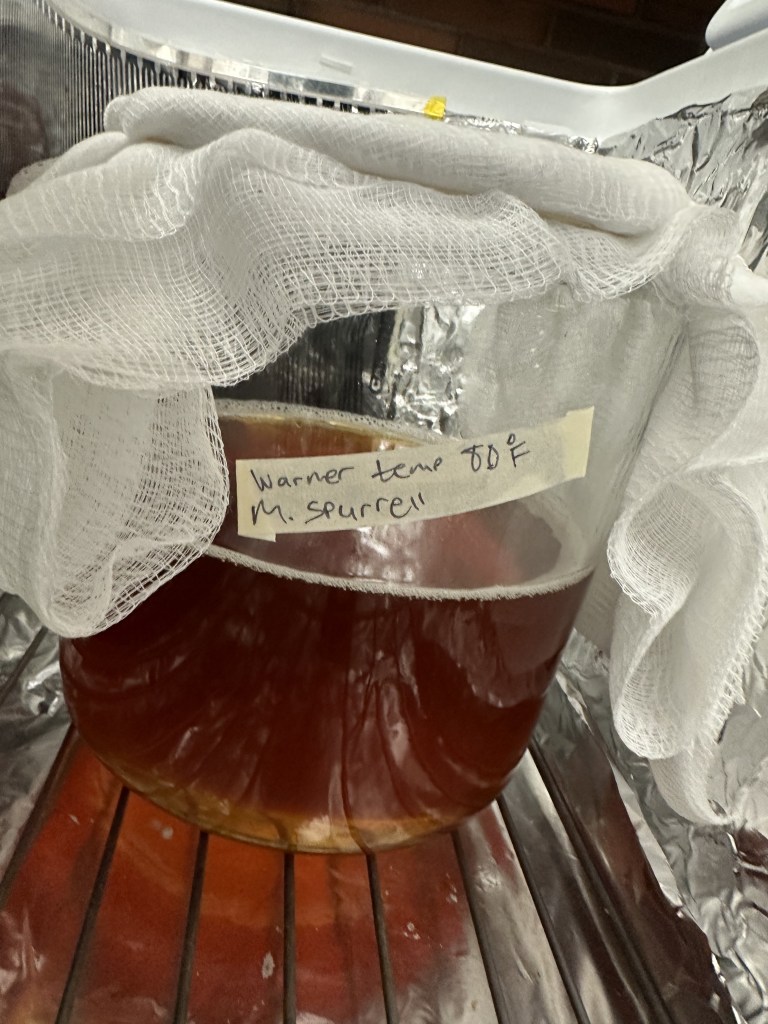
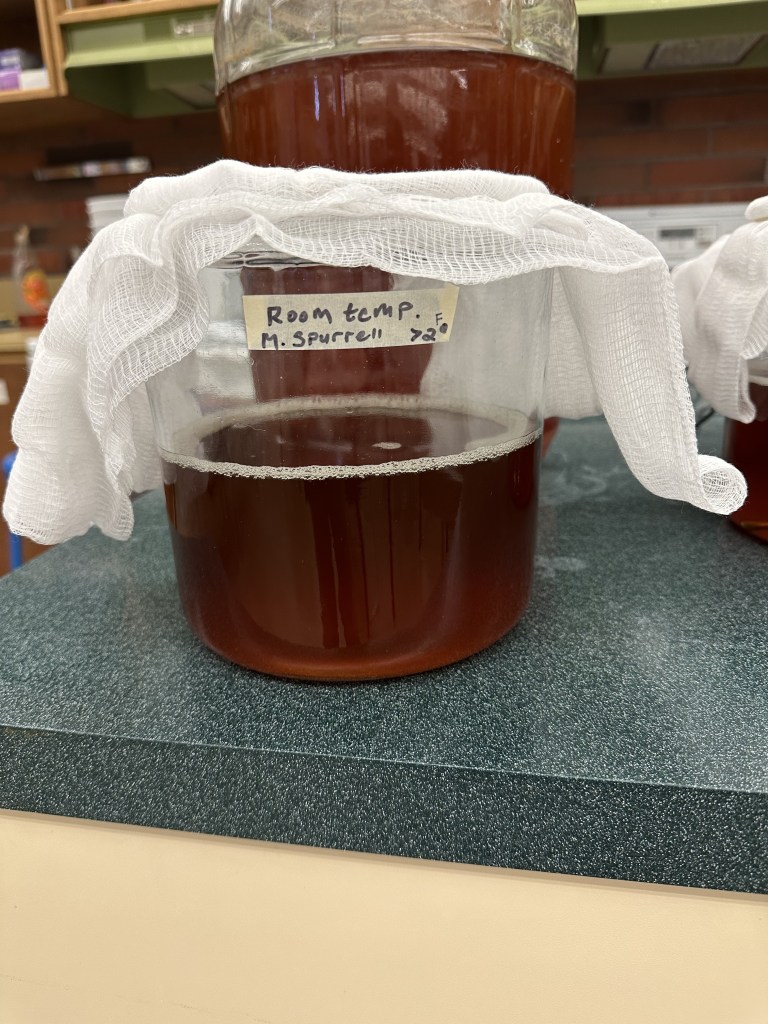
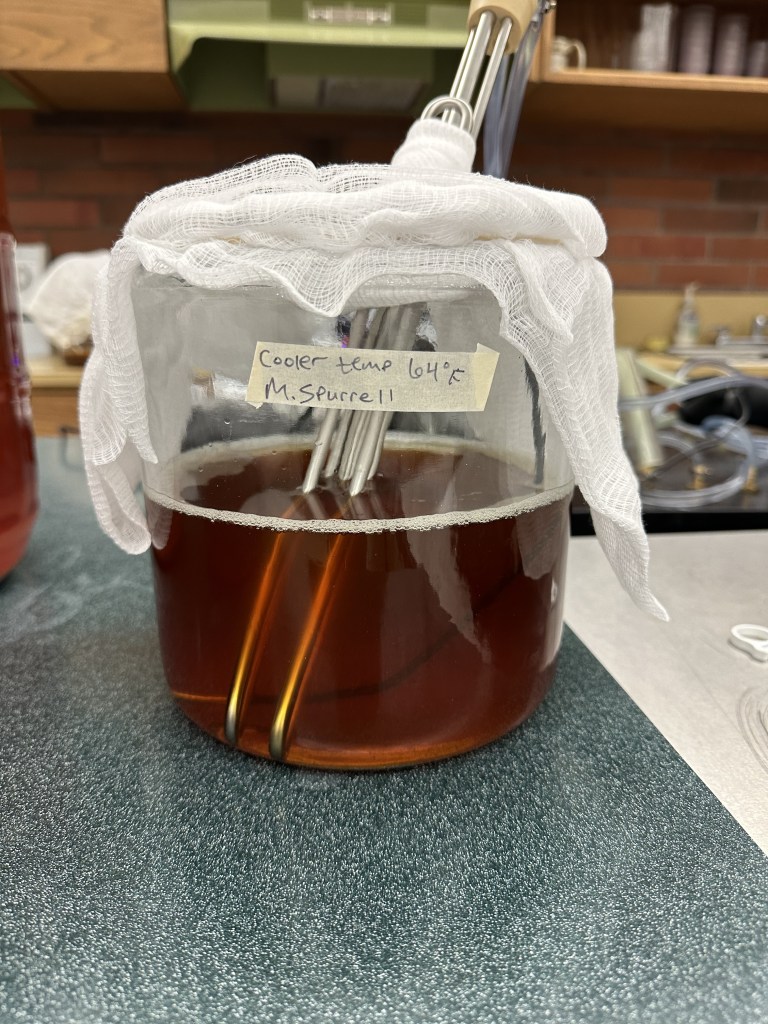
April 19, right after set-up (the rest of the photos are set up in this order)
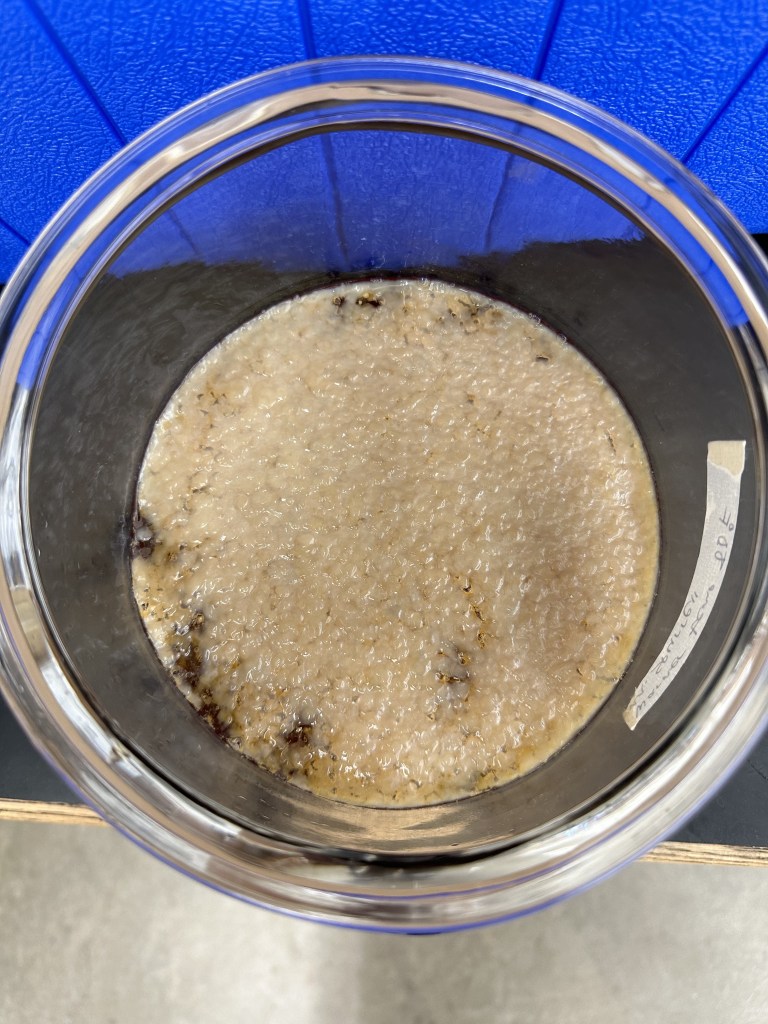

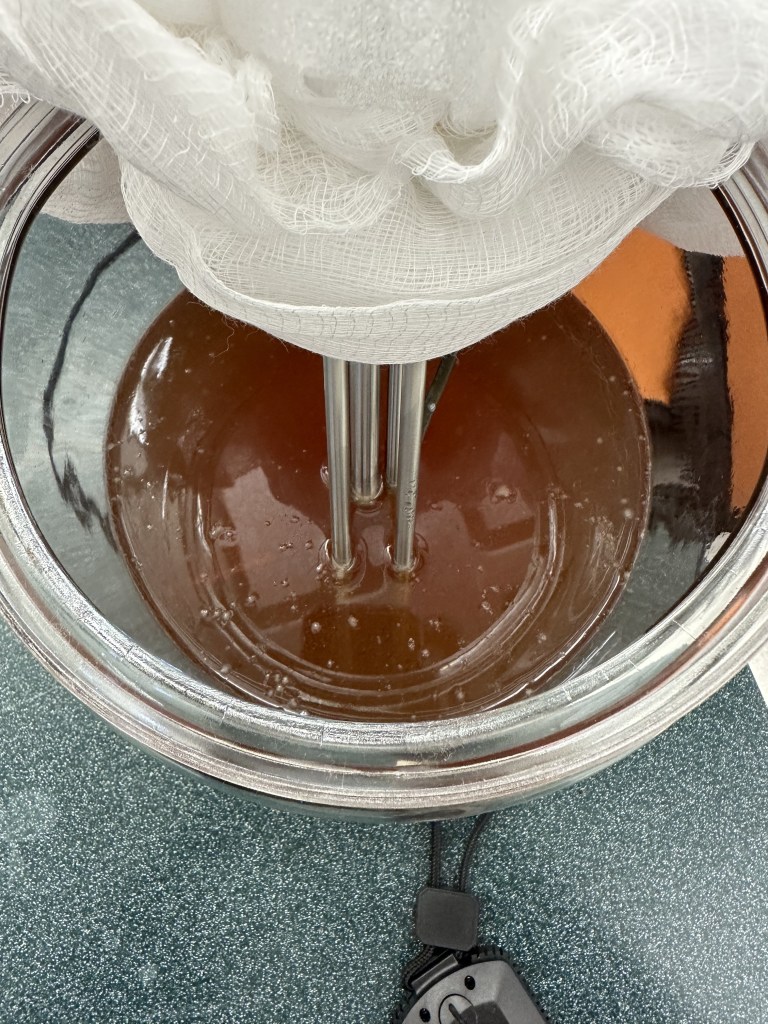
April 26th, one week of growth
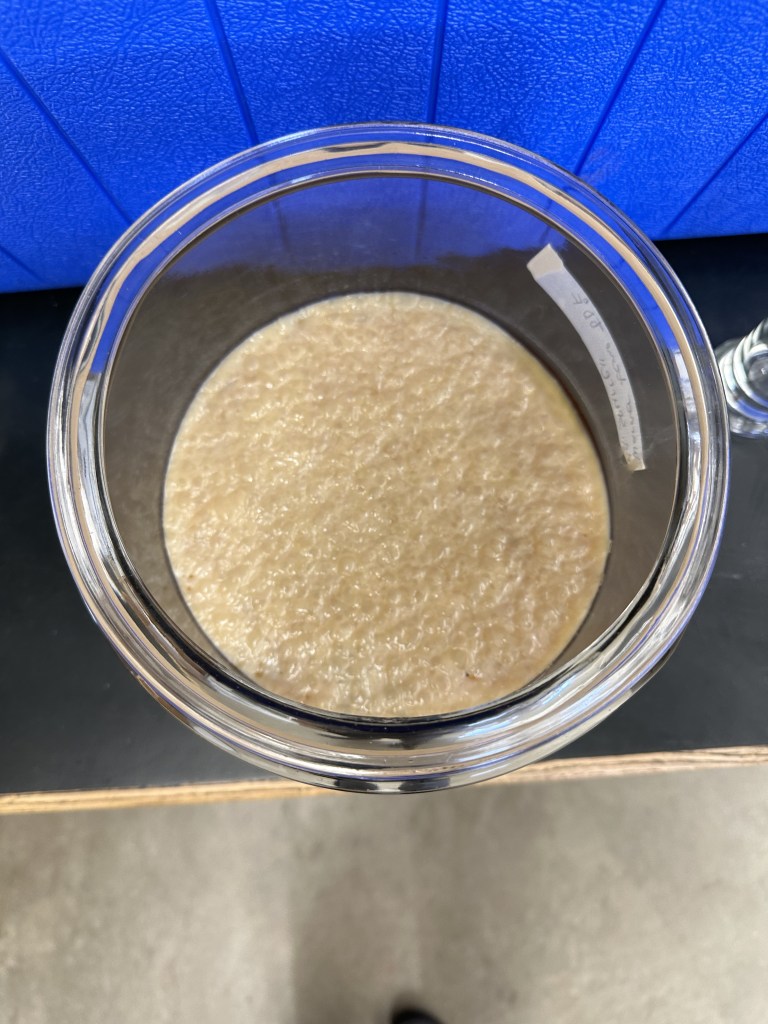
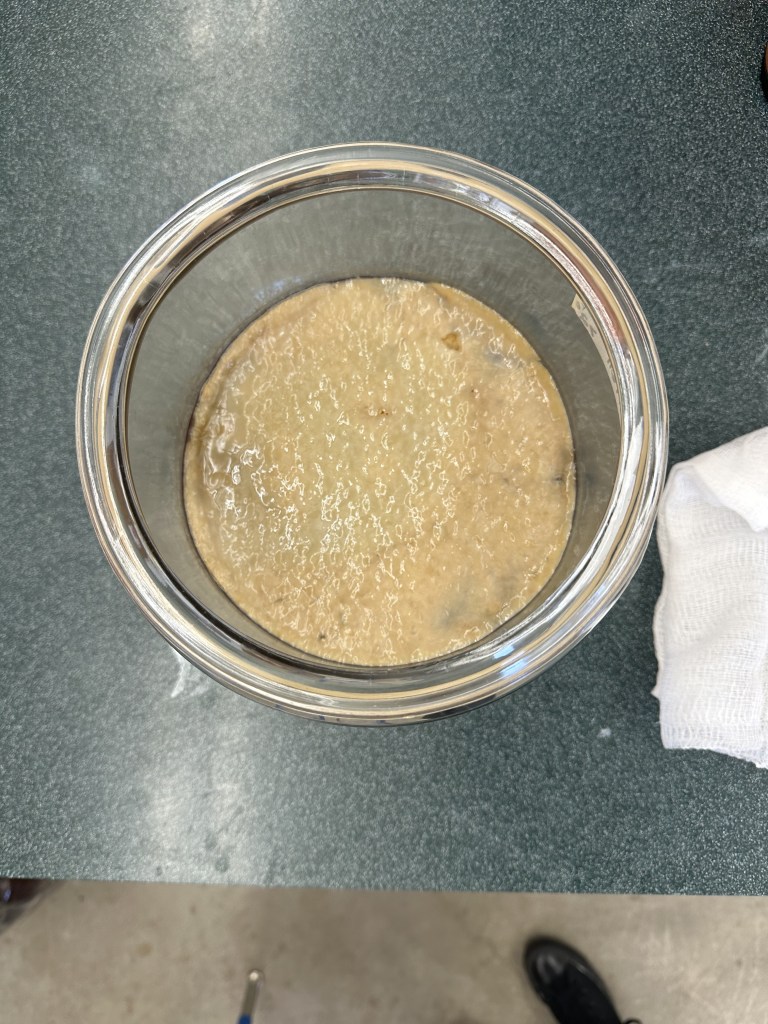
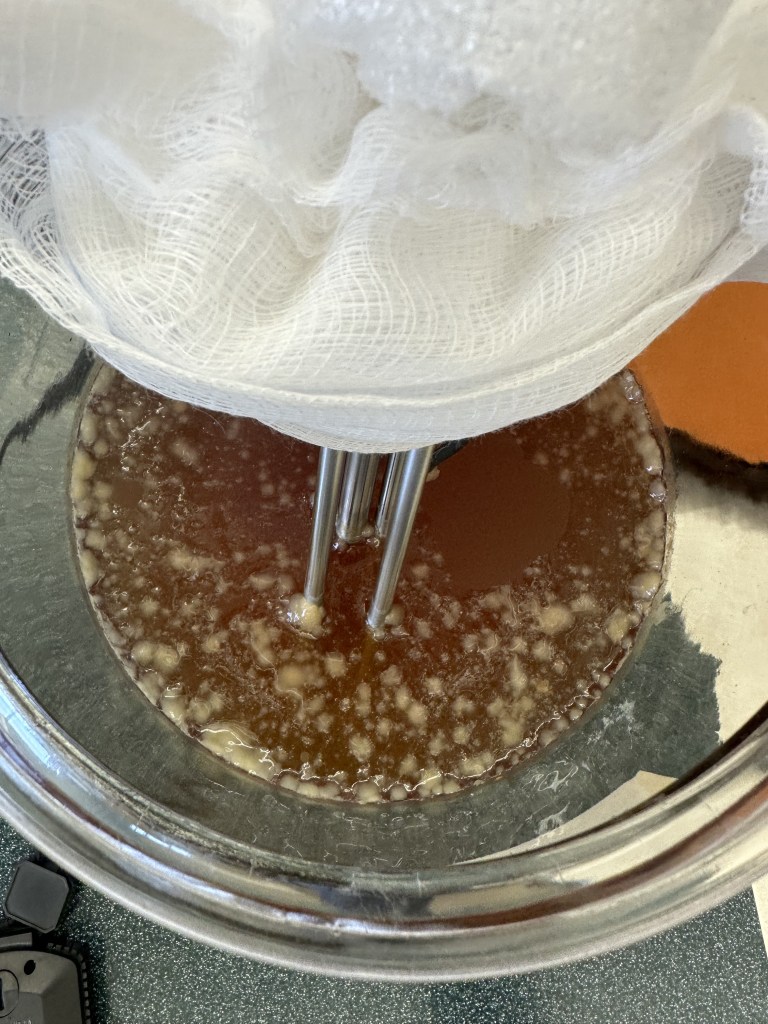
May 1st, 12 days of growth

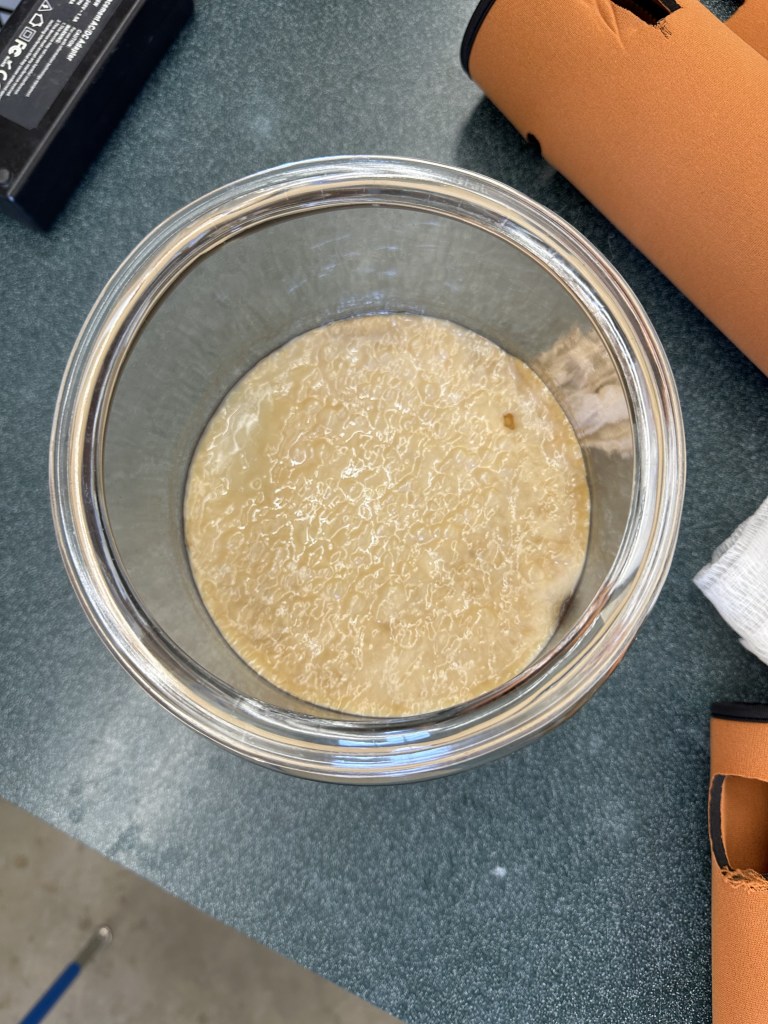
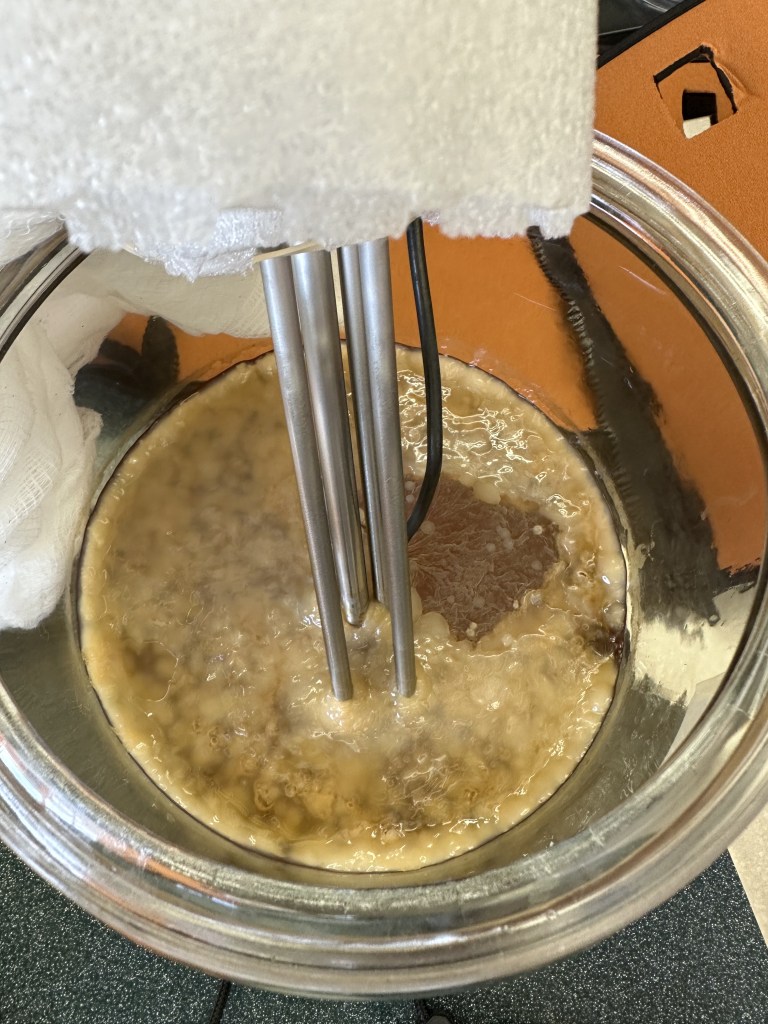
May 5th, final day of growth, taken right before SCOBYs were taken out to dry
 CWU Craft Brewing