This spring quarter I decided to do a project on different brewing yeasts and their sensorial differences in the final beer. In the past couple years of school, I have tasted a wide range of beer styles that were fermented with different yeast strains, which gave me a good idea of what characteristics some yeast strains may show in beers. A general understanding of these differences between, let’s say, an English yeast strain and a German wheat beer yeast strain was not satisfactory enough for me though, so I decided to brew a large batch of a beer using a simple malt and hop recipe, and then divide it into five separate fermenters to pitch different ale yeasts in to.
Back in the first week of April, I proposed this idea for my Spring Practicum. This included my recipe of pale malt, 20 IBU of Cashmere hops at 60 minutes in the boil, and five different dry ale yeasts: S-04 English Ale yeast, US-05 American Ale yeast, WB-06 German Wheat Beer yeast, BE-134 Belgian Saison yeast, and K-97 German Ale yeast. I brewed this beer according to my recipe, bottle conditioned, measured attenuation (how much of the sugar was fermented out) of each yeast strain, and wrote down aroma, appearance, flavor, and mouthfeel of each finished beer that started out the same but finished completely different (sensorially), depending on which yeast was used.
Using just over 9.5 pounds of pale malt and a pinch of acidulated malt for mash pH, my post boil original gravity was 1.047, giving me great efficiency on my Brewzilla all in one brewing system. The S-04 English Ale yeast fermented this 1.047 SG wort down to 1.009 SG, resulting in a 5.0% ABV beer. The US-05 American Ale yeast fermented this 1.047 SG wort down to 1.007 SG, resulting in a 5.3% ABV beer. The WB-06 German Wheat Beer yeast fermented this 1.047 SG wort down to 1.005 SG, resulting in a 5.5% ABV beer. The BE-134 Belgian Saison yeast fermented this 1.047 SG wort down to 1.003 SG, resulting in a 5.8% ABV beer. The K-97 German Ale yeast fermented this 1.047 SG wort down to 1.008 SG, resulting in a 5.1% ABV beer.
Each final beer was unique in regard to aroma, flavor, and mouthfeel. The final appearance was fairly similar across each beer though.
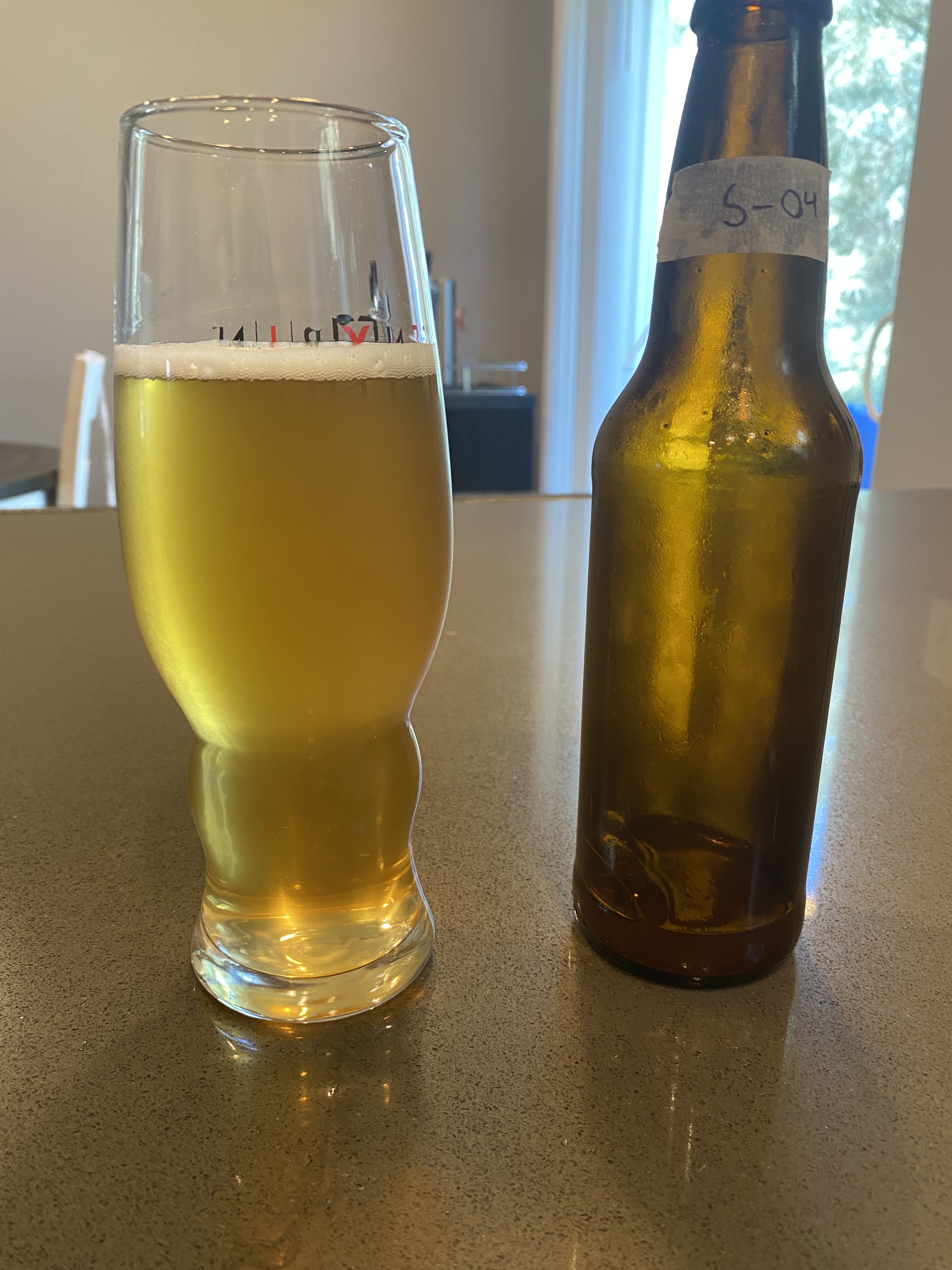
The S-04 English Ale yeast beer had moderate malt aroma with notes of grain, bread, honey, and hay. It had a very low to low hop aroma with floral notes. Low to moderate fruity esters with notes of cherry. No alcohol aroma. Its appearance was yellow, with a slight chill haze, a white rocky head with low but persistent head retention. The flavor had moderate malty sweet grainy characteristics with notes of cracker as well. The bitterness was low with no hop flavor and moderately low esters. The finish was smooth and malty with no alcohol warmth, but dry. The mouthfeel had medium body and carbonation.
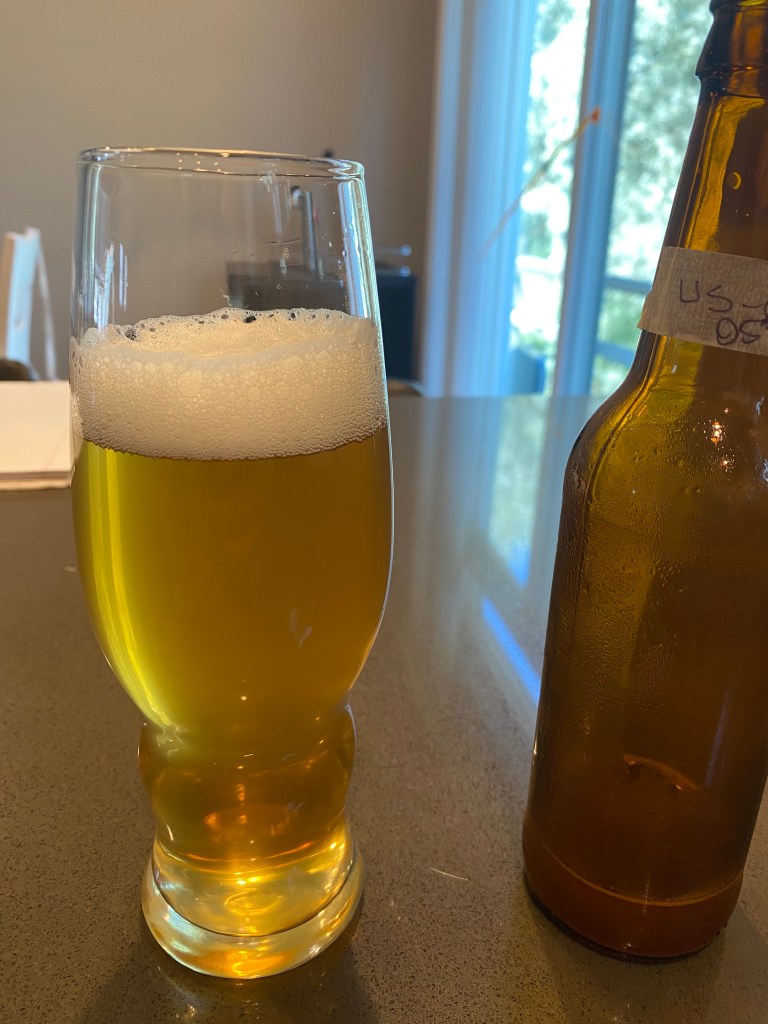
The US-05 American ale yeast had moderately high malty aromas of bread crust, very light caramel, and Hawaiian Sweet Rolls. There were low to medium bubblegum esters, and no hop aroma. The beer had a yellow color, with some chill haze that cleared when it warmed up, and a white medium rocky head with fair retention. It’s flavor had moderately high sweet maltiness with notes similar to the aroma, and moderately low bitterness with low herbal hop character. The fermentation character was clean with very low esters. The finish was malty and slightly dry but smooth. The mouthfeel had moderately low body, medium carbonation, no alcohol warmth.
The WB-06 German Wheat beer yeast had moderate sweet banana esters and spicy fermentation character in the aroma with low malty sweet grain notes, and now hop aroma or alcohol aromas. The beer had a yellow color with good clarity, but just a slight chill haze that cleared as it warmed up. The head was white with medium tight bubbles in the center and rocky towards the edge of the glass, and medium head retention. The beer had a medium sweet grainy and bready malt flavor with moderately high esters and moderately low spice. Low to no hop flavor, and smooth malty finish with moderate fermentation character, with low bitterness. The mouthfeel had medium to low body, medium carbonation, and a dry finish with no alcohol warmth.

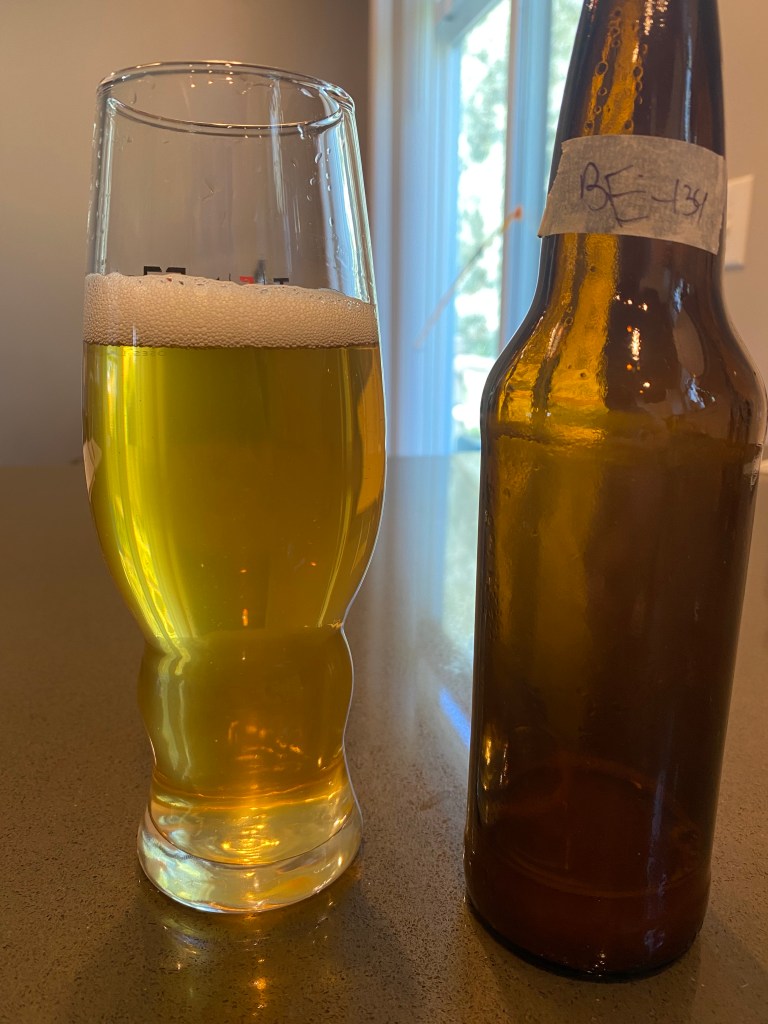
The BE-134 Belgian Saison yeast had a high spicy and fruity estery fermentation aroma with medium floral notes. The malt aroma was medium low with sweet grainy notes and low to no hop aroma. It had a yellow color, clear appearance with a slight chill haze and some light particulates floating that quickly settled to the bottom of the glass. The head was white and medium rocky with low retention. The flavor was moderately high fruity esters and phenolic spice, balanced with low to medium grainy malt sweetness. Medium low bitterness and a very dry malty finish, with pleasing lingering fermentation character. The mouthfeel had light body, medium carbonation, and light alcohol warmth.
The K-97 German Ale yeast had medium grainy, crackery, bready malt aroma with very a clean fermentation, no esters or phenols. It had a low herbal hop aroma, and no alcohol aroma. It was yellow and clear with a slight haze, and had a medium white rocky head with low retention. The flavor was moderately malty with notes of crackers and bready. Very clean fermentation character, the most similar to a lager. The bitterness was medium low and had low to no hop flavor. The finish was very smooth, crisp, and malty. The mouthfeel was light body, medium carbonation, and no alcohol warmth.
I had a lot of fun with this practicum experiment and learned a lot more about different yeast strains and their effects on pale malt wort. I felt that this practicum was a success, other than the fact that I forgot to take pictures of the German ale beer. I met every goal from my practicum proposal. The biggest take away I got from this experiment was how clean the German ale yeast strain was. I have been using US-05/Chico ale yeast due to its usual clean characteristics, but I honestly thought that the K-97 German ale yeast had the cleanest fermentation character, and I want to experiment with that strain even more in both hoppy and malty beer styles.
In the future, I would like to experiment with different lager yeast strains. This practicum I chose to only use ale strains that had similar fermentation temperature range recommendations because I only had one fermentation chamber. Next time I will gather five different lager yeast strains and perform an experiment similar to this one, the only difference being the strains of yeast and the lower fermentation temperature, and longer cold conditioning time.
 CWU Craft Brewing