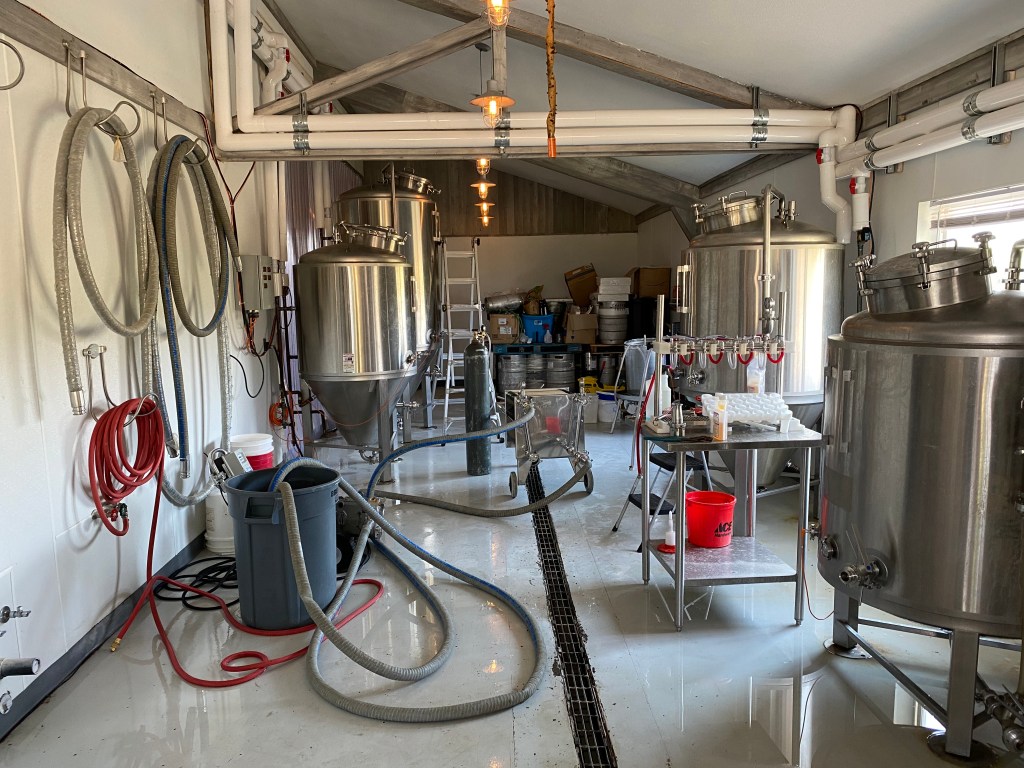
Working at Wheel Line Cider has given me a lot of experience, specifically working hands on with big fermentation tanks, pumps, lab work, and being up in an orchard! My first week there was such a great experience, my boss Nate had just finished up on a hibiscus cider that he had made. The coolest part about that week was that I was able to sit down with him and taste and smell the cider and write down any notes that I caught from the cider. We ended up combining what we had written down and made tasting notes on the label for the cider.
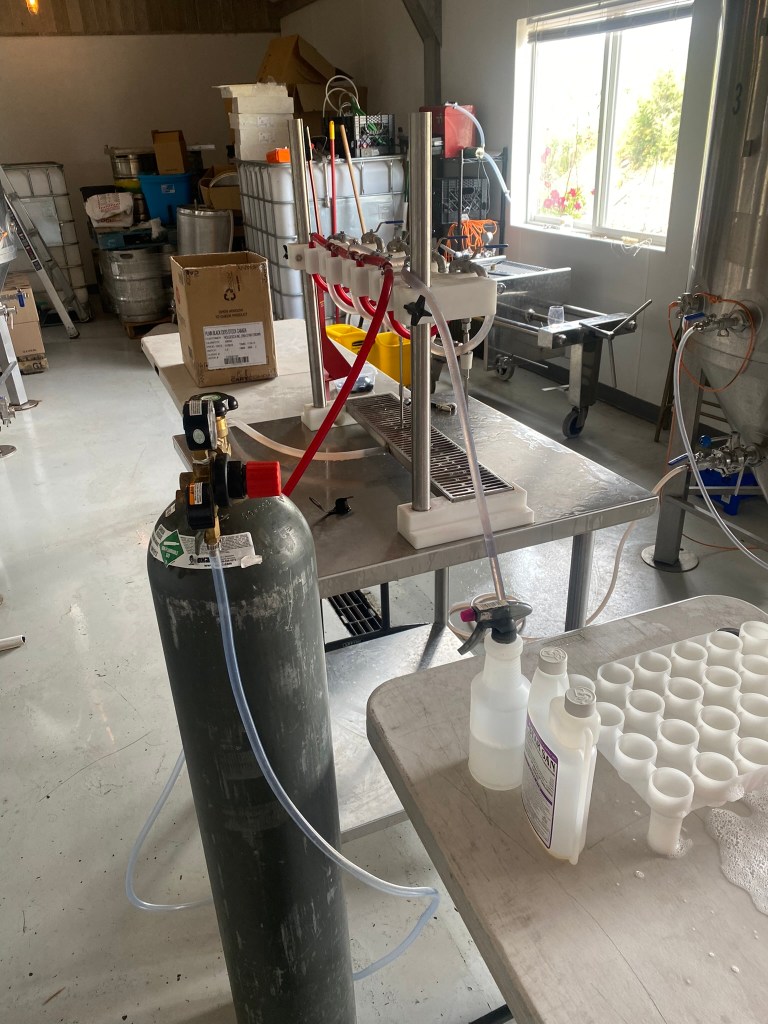
My second week on the job felt like the longest time because it was bottling week. The hibiscus cider was done and ready to be bottled. It’s only Nate and I in the cidery so while he filled each bottle I would cap them one by one. By the end of the day we had filled and capped over 800 bottles of cider, and that was just one day of bottling.
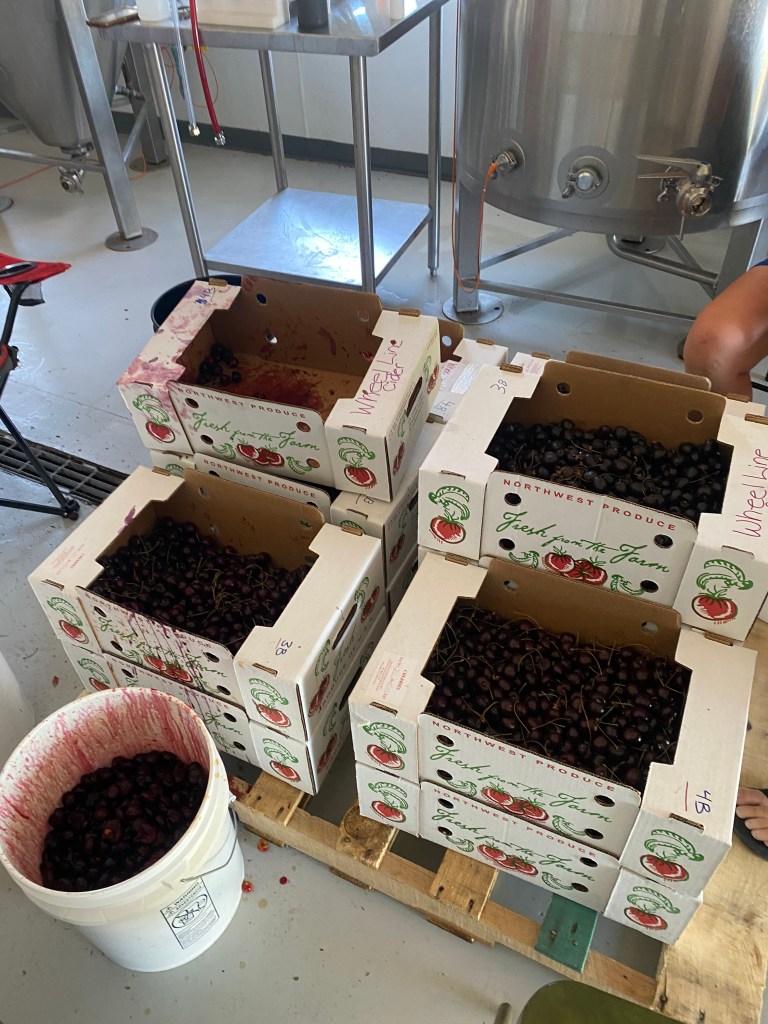
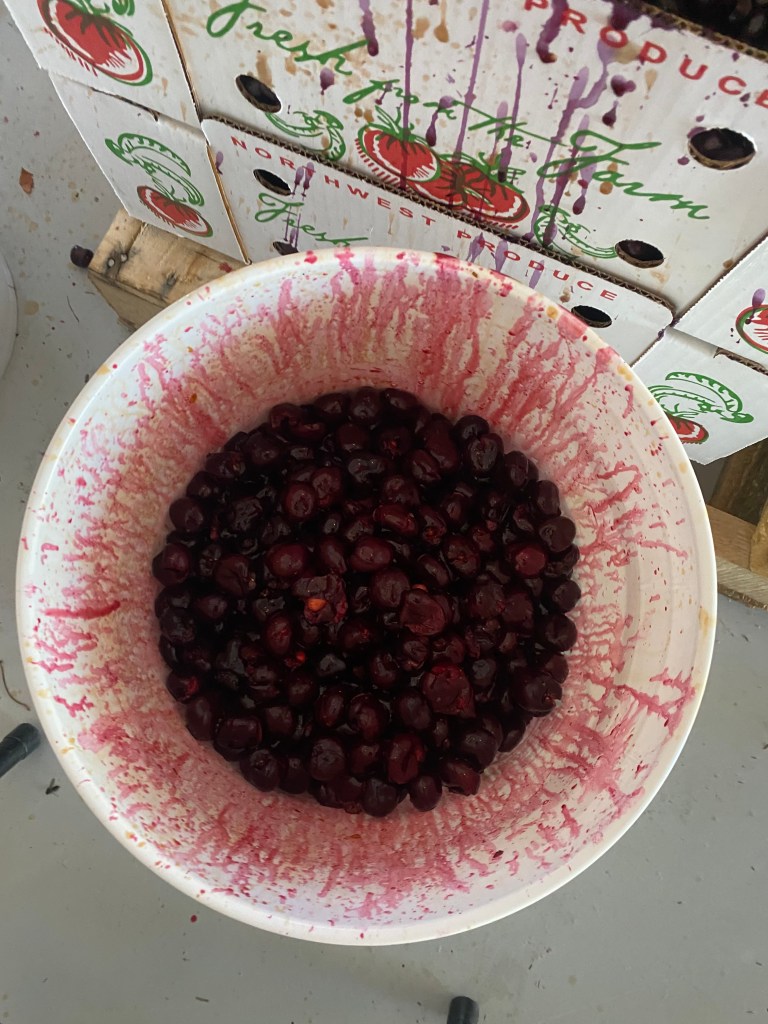
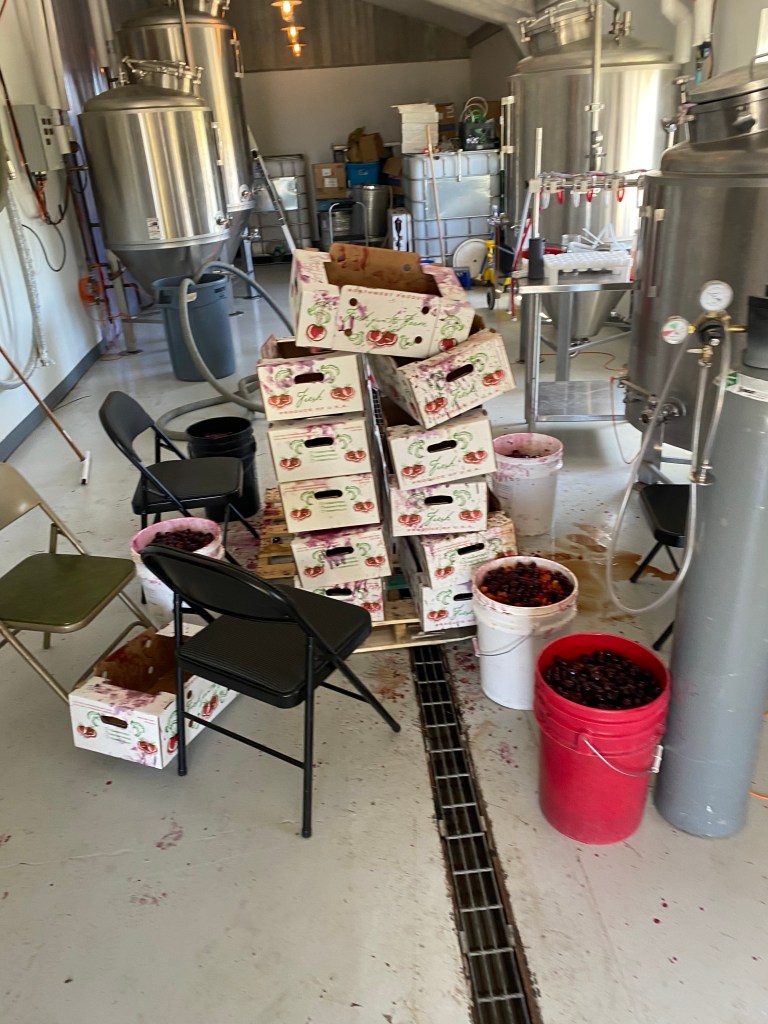
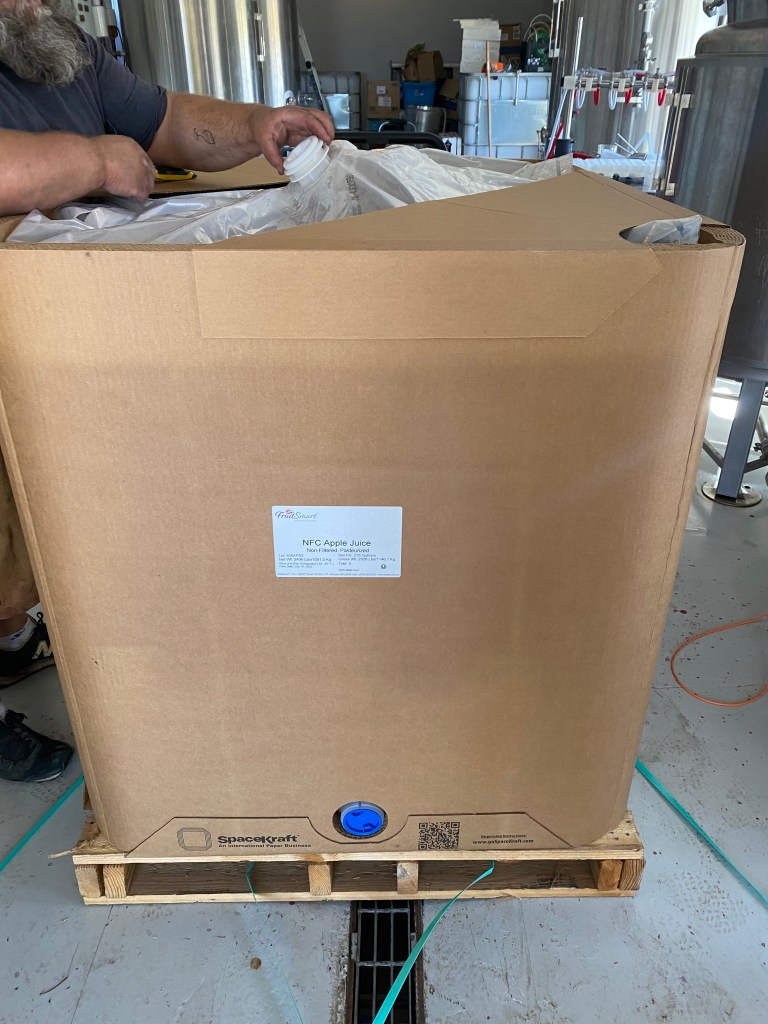
The third week in was the busiest we had been all summer. The hibiscus cider was out of all our tanks and bottled up into boxes. Next we had about 300 lbs of cherries being ordered for our next cherry cider. I was in charge of cleaning the tanks that day, and by this time I was able to CIP without any supervision and could thoroughly do a good job with each wash and sanitation. The day after the tanks had been cleaned and sanitized we had received all the cherries for our cherry cider. We started just around 9:30 and began de-stemming and squishing each individual cherry which lasted about 6 hours. After that we pumped 8000 lbs of fresh apple juice into 4 tanks so we could get ready for our cherry cider and our hopped cider.
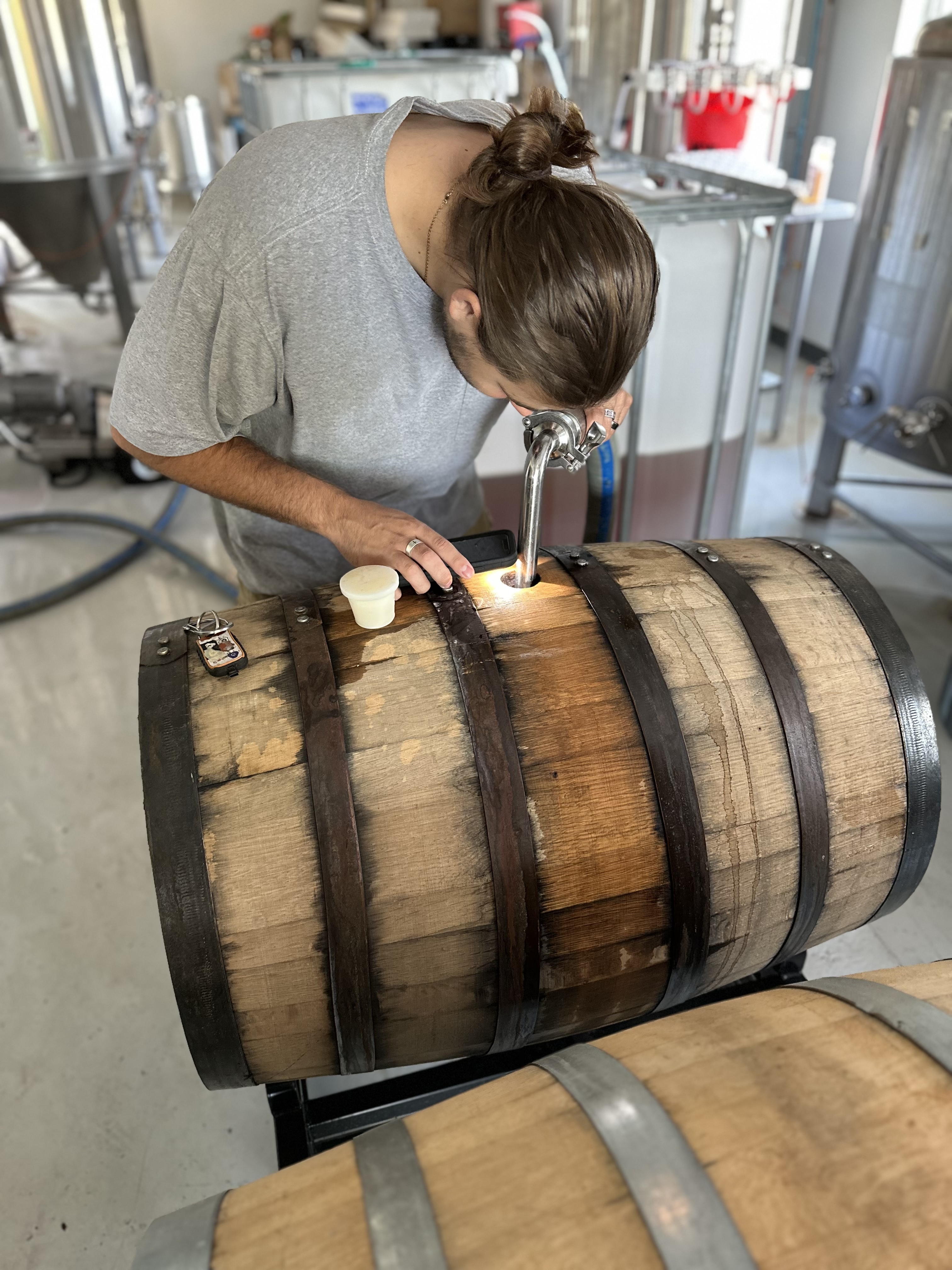
Week four and five we did a lot of lab work as well as cleaned and fixed up some of our oak barrels. I learned how to correctly measure pH and brix using a few different options. I also have been learning about all the different fining agents and nutrients we add to the cider. I have been able to set up a bubbler system in the lab and make solutions to test the pH using a titration system. We also have been keeping a close eye on our two ciders that are fermenting and adjusting the glycol when needed as well as any nutrients that need to be added for the yeast.


One of my favorite days at work was the second week of August when my boss and I went up into the orchard and tasted each individual apple and tested the brix of each kind of apple. This was a great experience to see how it’s all done as well as learn about each type of apple and some of the history behind some lost apples they have found.
These last few weeks we have been focused on one thing only in the cider house. We had to get both of our current ciders in the tanks racked into totes and back into the tank and then bottled up, which will be this week. Harvest is coming up and we need to have everything cleared, cleaned and sanitized before harvest starts.
My most recent day at work we filtered each cider through our filter with cellulose pads. This is a very long and slow process, most of the time you’re just watching the filter and paying attention to the pressure and adjusting anything on the pump or filter that needs to be adjusted. After each tank has been emptied and filter is done being used we use SO2 and citric acid with a bunch of water and blast it through the filter using the pump to clean everything out and have it ready for next time.
My next goal is to put the hops in two of our tanks which will be a dry hopped cider and then start bottling the dry hopped cider as well as the cherry cider. This will be our last cider before harvest and I am really looking forward to picking the apples and pressing them to make our juice for our very own ciders we make!
 CWU Craft Brewing